

By Woodworking Industrial Engineer, Oğuz Gültekin

The Quiet Revolution That Carried the Turkish Furniture Sector to the Global League, with a Historical Perspective, Current Assessment, and Common Misconceptions
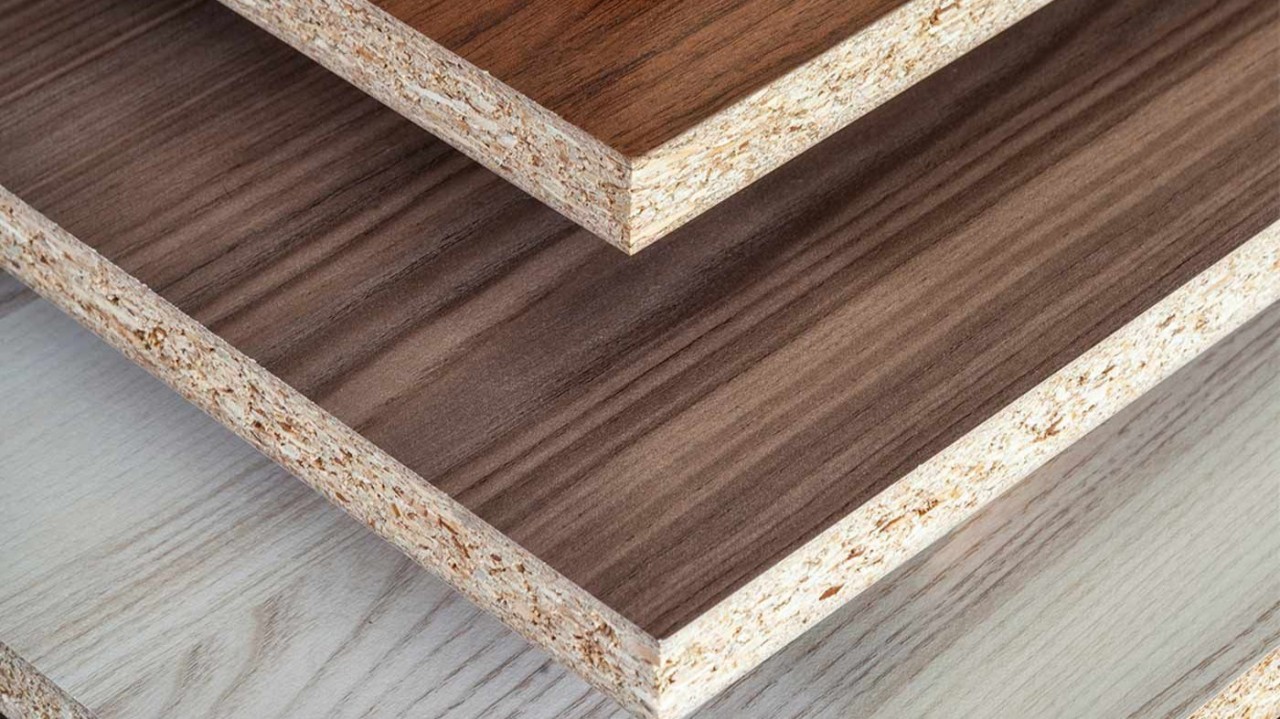
Sixty years ago, chairs, tables and cabinets crafted by hand in small workshops have transformed into a giant industry employing more than a million people and exporting over five billion dollars annually. We owe this transformation to our unseen heroes: particleboard and MDF. In this article, I explain step by step how this quiet revolution unfolded, which misconceptions still circulate, and why these materials mean not “cheapness” but, on the contrary, “rational engineering.”
1950s–1970s: The Forced Transition from Solid Wood to Panel Boards
In the 1950s, furniture in Türkiye meant only solid wood and plywood. However, the population was rapidly urbanizing, and cooperative housing and mass housing projects were booming. Solid wood was both expensive and insufficient. Particleboard production in our country began for the first time in the final months of 1954 at the “SUNTA” Tahta Sanayi T.A.Ş. plant in Kartal, Istanbul. This facility was a turning point that carried furniture from “handcraft to mass production,” and workshops gradually turned into factories as a result.
1990s–2000s: The Arrival of MDF in Türkiye and the Boom Years
MDF was invented in the world in the 1960s. Türkiye’s first fiberboard factory was established in 1985 by Çamsan Ağaç Sanayi in Ordu. The delay can be attributed to factors such as high investment costs and the expectation that access to raw material sources would be facilitated.
Revolutions Brought by Particleboard and MDF
- Transition to serial and rapid production
- Diversity in construction and aesthetics
- Compatibility with CNC machines for carving and profiling
- Excellent compatibility with top-coat painting, wood veneer, laminate and thermoform PVC wrapping processes
- New surfaces with infinite colors and patterns through melamine facing
Five Common Misconceptions and the Facts
- Particleboard is low quality; MDF is high quality.
Quality is determined not by material type but by density (650–850 kg/m³), adhesive quality (E0/E1), surface facing and edge banding. Particleboard is ideal for carcasses; MDF is ideal for doors and visible faces. Used together, they deliver the optimum result. - MDF is water-resistant. Particleboard (sunta) is not.
Both are not inherently water-resistant. If desired, moisture resistance can be increased by producing them with special chemicals and adhesives. - Panel furniture is not wood.
Wood-based boards consist of 88–92% wood (chips or fibers) and 8–12% other chemicals. They represent a far more efficient use of forest resources than solid wood. - Particleboard (sunta) and MDF cause cancer.
Since 2010, the E1 standard has been in force in Türkiye, and E0 and CARB2/TSCA standards are mandatory among exporting companies. Products purchased from quality brands are completely safe. When buying furniture, you can request E0 and E1 certificates for the boards used. - Panel furniture is preferred because it is cheap.
Panel furniture is preferred because:
It offers very broad design freedom.
• Flat-pack packaging and knock-down production provide serious logistics advantages.
• It offers production standardization, modularity and easy assembly.
• Its price-performance balance is top tier.
Türkiye’s Success Formula: Investment + Technology + Capacity
Today in Türkiye, combined capacity for particleboard, MDF and OSB is approaching 16,000,000 cubic meters per year. Alongside these boards, the rapid tracking of technological advances in furniture manufacturing systems has made the Turkish furniture industry a supplier respected by major global players. The “Made in Türkiye” label in furniture now means quality and fast delivery.
This Is Not a Story of “Cheap Material,” but a Story of a Rational Industrial Revolution
Türkiye, by daring to invest at the right time, has regarded particleboard and MDF not as “cheap alternatives” but as engineering materials that can be processed with high technology, are sustainable and design-friendly. Today, many European countries take Türkiye as an example in panel furniture and board production. On this journey, particleboard and MDF have not been just materials, but the main characters writing the global success story of the Turkish furniture sector.