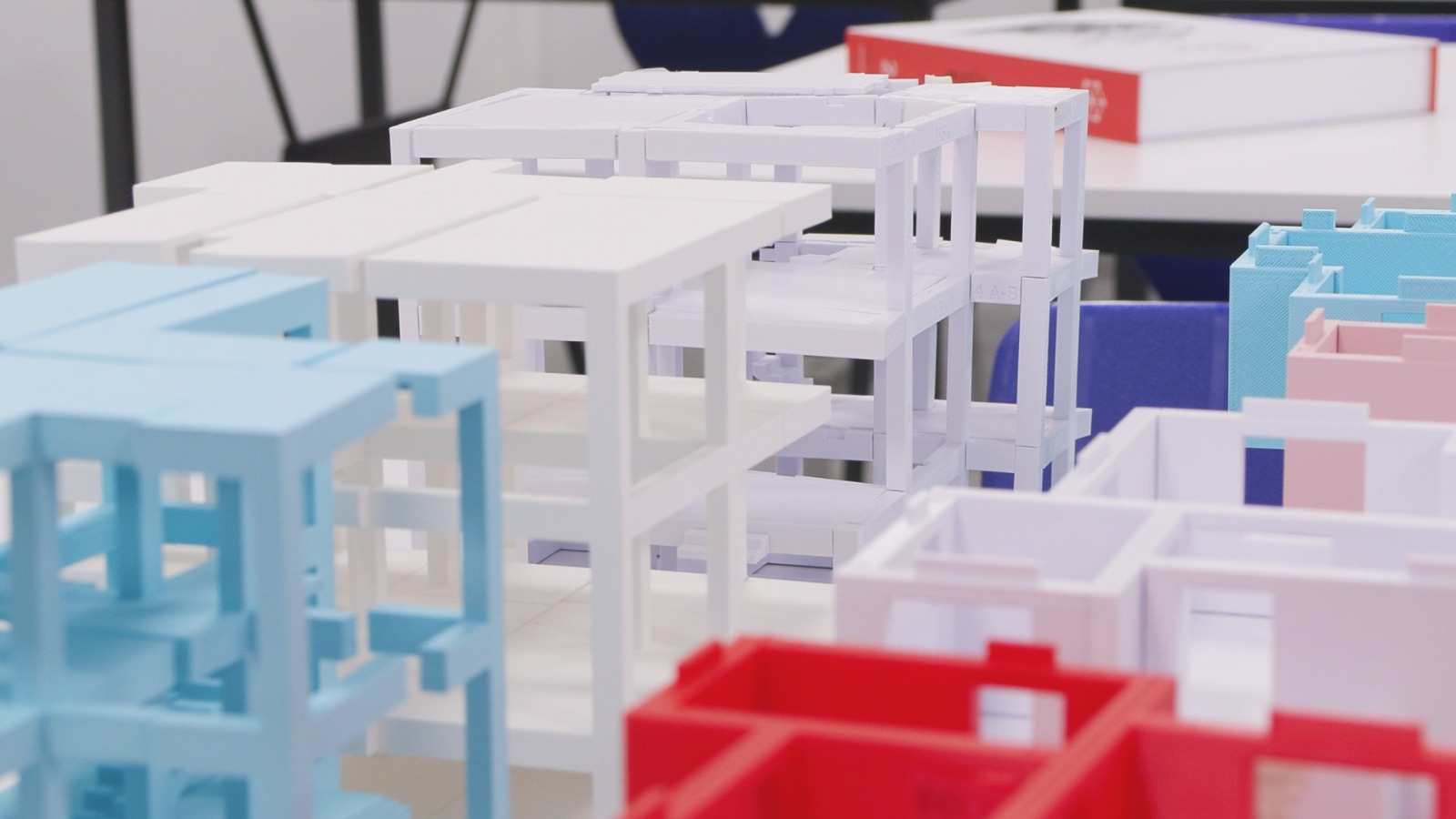
3D-printed kits developed for architecture students’ building courses provide opportunities for experiential learning. Designed first and developed with a “game” logic, these educational kits aim to improve students’ technical drawing and structural thinking skills. Speaking about the kits they developed, Dr. Lecturer Esra Karahan said, “We receive very positive feedback from our students. While learning the course with models, they say, ‘Oh, is that how it works? That’s so simple.’ For our courses, which are often known as more serious, this is a very positive development. Being able to accomplish the work by playing, making, and experiencing it concretely, and making this course fun, has been a very valuable outcome for us.”
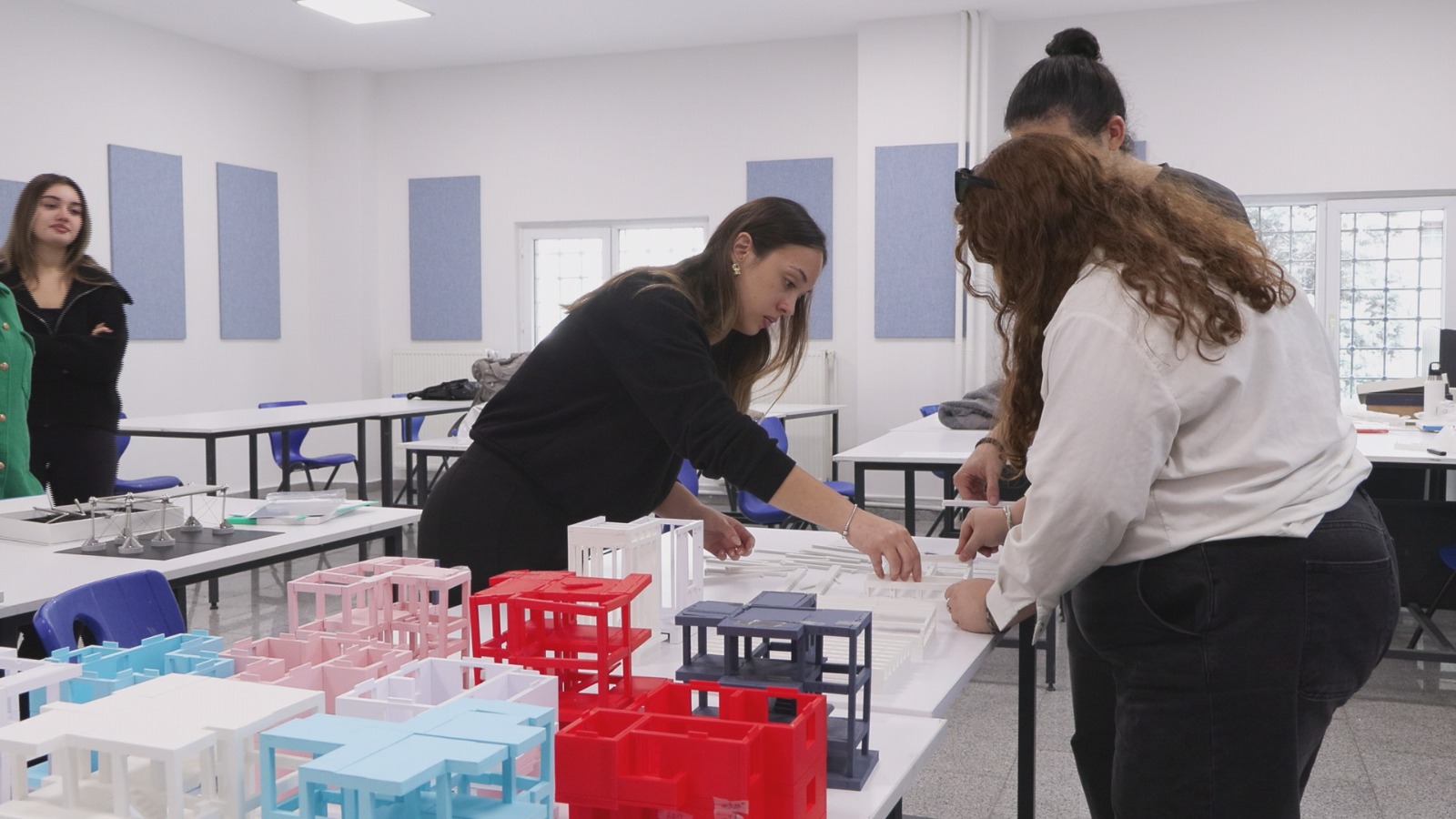
Yeditepe University Faculty of Architecture has implemented an innovative project to improve students’ knowledge of building systems. Applied in the Building courses within the faculty, the project aims to develop students’ technical drawing and structural thinking skills through experiential learning. The system designed in the project is not limited to models alone; it includes educational 3D-printed kits designed with a “game” logic. These kits allow students to observe different systems, elements and layers in a building by assembling them together. Teaching assistants Bükre Pazar and Sude Acarbay actively support the modeling and production processes and work with students in classroom applications to observe their impact on learning.
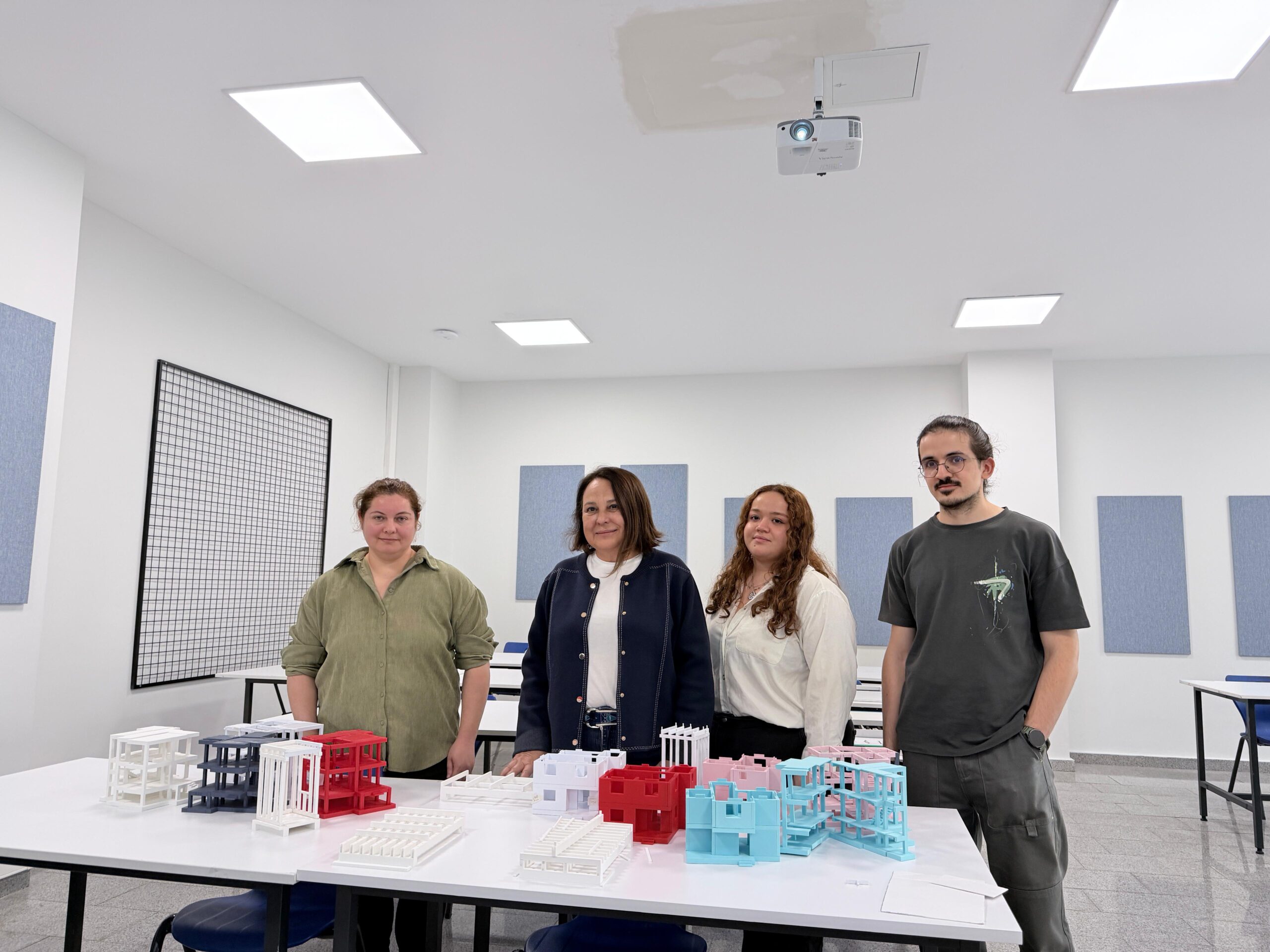
Asst. Prof. Dr. Aktuna: We Integrated a Learn-by-Playing Pedagogy
Yeditepe University Department of Architecture’s Asst. Prof. Dr. Bahar Aktuna explained that students find building courses challenging and described the project as follows:
“I have been working in the Department of Architecture for five years. In recent years, we observed that building courses are among the most challenging. Students are much freer in design courses. Building courses proceed more rigidly. The representation of reality becomes very strict, and not being on a construction site at that moment, explaining everything through theory, and the need to represent it clearly makes the process very challenging for students,” she said.
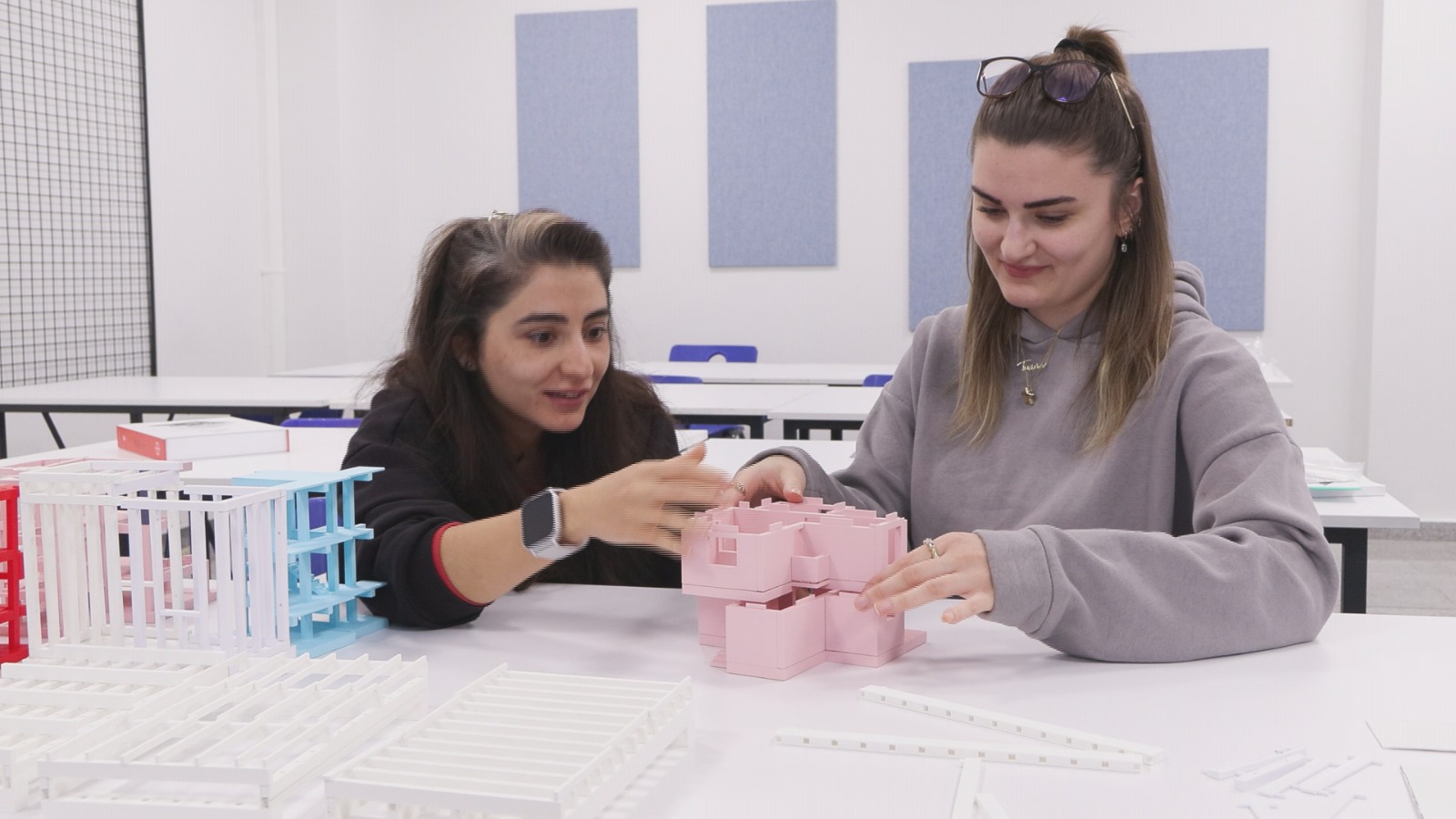
Noting that they have been developing new pedagogies because students struggle with this course, she continued: “We first integrated a ‘design-and-build’ pedagogy so students could directly observe building systems and elements, and we started using this in the course. This was very beneficial but a time-consuming process. We then moved from a ‘learn by building’ pedagogy to a ‘learn by playing’ pedagogy, creating more flexible spaces on scaled models where students can bring systems together and observe how everything comes together, and how different systems, building elements and layers overlap. We actually demonstrate this with our colored models.”
Practical, Fast and Comprehensible
Describing the aspects that challenged students before the models were introduced, Asst. Prof. Dr. Aktuna said:
“For example, in the ‘Building 1’ course we work on reinforced-concrete systems, and students learn how many systems in small, lower-rise buildings come together, from the structural system to the envelope system to interior systems, and how they take shape and overlap with building elements. At the same time, they need to express this by drawing on different planes. It is a very broad subject and takes time to reinforce, yet the time we can devote within an academic year is very limited. We designed a system that could make the process more practical, faster and more comprehensible.”
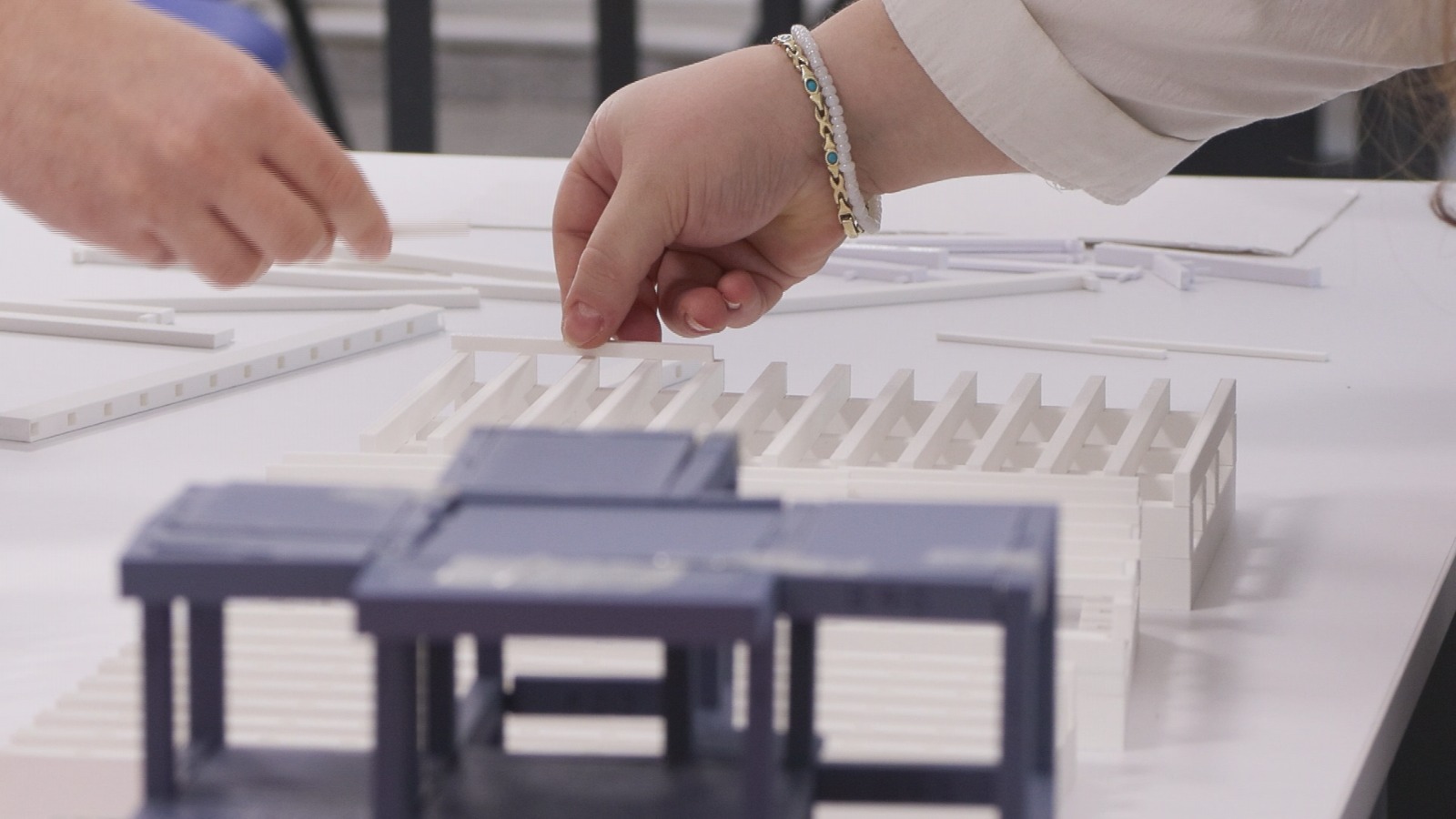
Dr. Lecturer Esra Karahan: The Kits Direct Students Toward Experience
Dr. Lecturer Esra Karahan from Yeditepe University Department of Architecture described the kits that offer students experiential learning opportunities:
“We had identified some issues related to building courses with my colleague, and we update our courses every year based on these. This term, we wanted to introduce a new pedagogical approach and designed a number of kits for this purpose. We produced these kits on the 3D printer available at our school and put them into practice during the term,” she said.
Karahan continued: “The purpose of designing the kits was this. Typically, we start courses with theoretical lectures, and our course continues with applications and drawings. We reversed this a bit. First, with the 3D kits, without giving any information on the topic of the day, we present the problem to students for a concrete experience. While students experience these, we as instructors do not tell them ‘right’ or ‘wrong.’ We only ask them developmental, open-ended questions to help them be sure whether what they are doing is correct. This is the process. After this process ends, students share their observations, and then a theoretical presentation follows in which these are explained in detail. Afterwards, they apply what they have learned in another project.”
Sharing the feedback received from students after the new application, Dr. Lecturer Karahan added: “We receive very positive feedback from our students. While learning the course with models, they say, ‘Oh, is that how it works? That’s so simple.’ This is a very positive development for these courses, which are generally known as more ‘serious.’ Accomplishing the work by playing, making and experiencing it concretely, and making this course fun, has been a very valuable outcome for us.”
Karagülle: I’ve Started to Understand Better
Student İncisu Karagülle stated that she was taking the course for the second time and understood it better in her second year thanks to the materials:
“I took the Building 2 course last year as well, but it was incredibly difficult for me because I couldn’t visualize what was being explained. This year, with these models, I’ve started to understand better what our teacher is telling us. I combined it myself with hand-eye coordination and created the models based on what I saw on the board. These were very useful for me. That’s why the course is progressing much more easily for me compared to last year,” she said.
Karagülle added, “For courses like this, I think having model-type materials would be very beneficial for students. Because when you see it in your hand, you can understand the course more easily and imagine it more easily.”