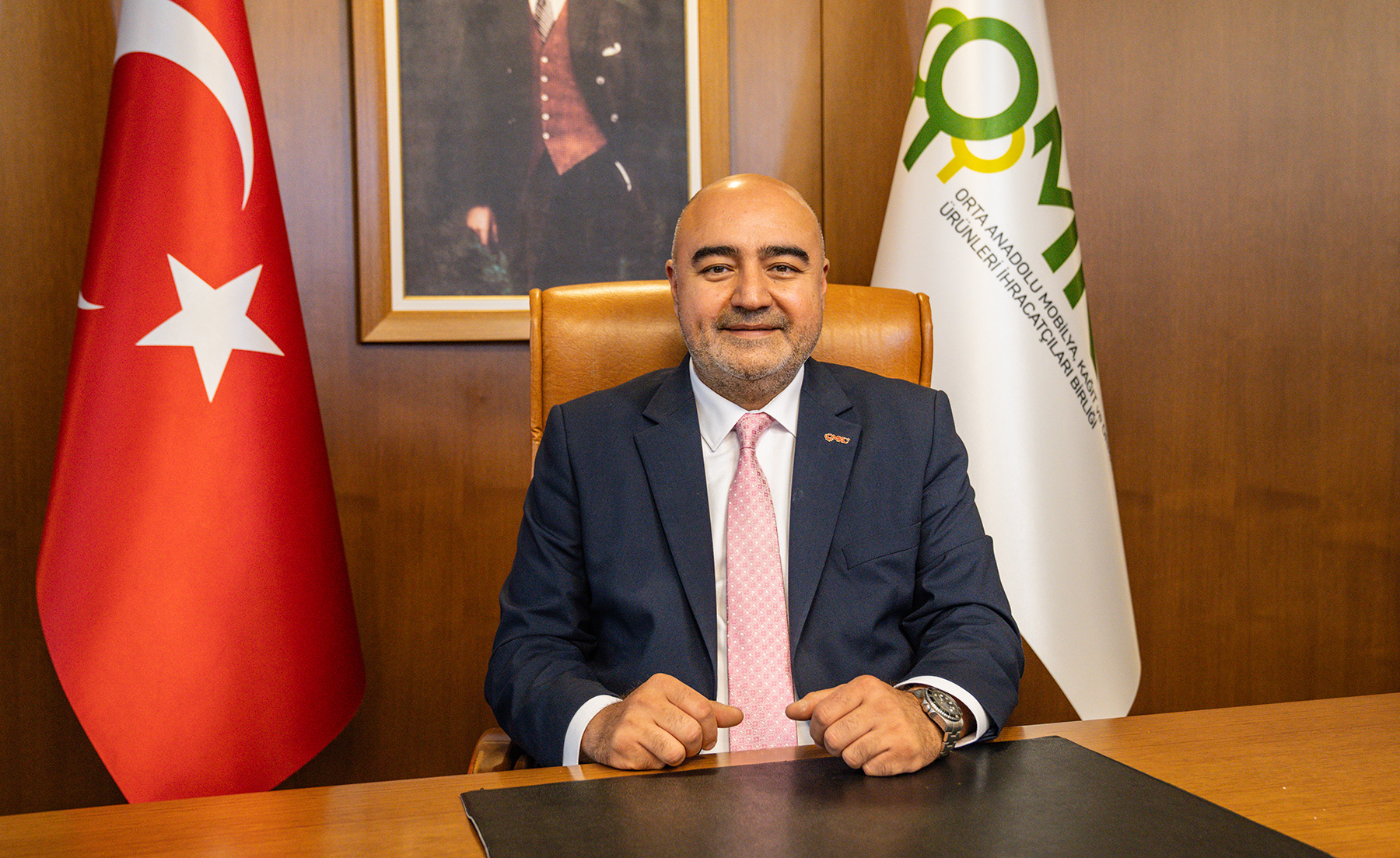
Organized by the Central Anatolian Furniture, Paper and Forestry Products Exporters Association (OMKO), the 16th National Furniture Design Competition received 1,096 entries. With a total prize pool of ₺977,500 this year, the winners will also have opportunities to study at institutions abroad. Stating that they view design as the fundamental element that reinforces the global brand perception of Turkish manufacturers, increases product value added and steers exports, OMKO Chairman Tahsin Ata said, “To date, the number of designers who have benefited from government support for overseas education and living expenses has reached approximately 300. We expect the young people who will qualify this year to contribute to the design vision of our furniture sector in the period ahead.”
Held under the coordination of the Ministry of Trade, in cooperation with the Turkish Exporters Assembly (TİM) and organized by OMKO, the 16th National Furniture Design Competition received 1,096 submissions. Launched with the slogan “Design for Export” to help boost the international competitiveness of the furniture industry through innovative design, the first Selection Committee meeting has been completed. In the second phase, where the “Design for Export” emphasis is highlighted at every stage and designs in different categories such as home, office, kitchen–bathroom and smart furniture are addressed in ways that will contribute to exports, contestants have until 22 August 2025 to develop their ideas.
In the competition, projects by primary, middle and high school students will be turned into three-dimensional models by professional designers, and the winning designs will be announced at the Award Ceremony on 24 September 2025. A total of 38 awards will be presented, with a prize pool of ₺977,500 this year. With government support, the winners will also have opportunities to study at institutions abroad such as Italy’s Domus Academy and NABA, the U.S. CCS College and Design Founded By Politecnico Di Milano.

“To stand out in global competition, you must invest in design”
Stating that they position the National Furniture Design Competition as an investment in young people to strengthen the long-term competitiveness of Türkiye’s furniture industry, OMKO Chairman Tahsin Ata said:
“The manufacturing strength of the furniture industry alone is no longer sufficient in today’s competitive environment. High technology and sustainable production, especially design capability, are prerequisites for standing out in global markets. Türkiye ranks first in MDF board production in Europe and third in particle board. No matter how strong our production infrastructure is, we know that if we do not invest sufficiently in design our sector will not reach its rightful place in the value chain. We see design as the key element that reinforces the global brand perception of Turkish manufacturers and that increases the value added of our products, thereby steering our exports. To date, the number of designers who have benefited from government support for overseas education and living expenses has reached approximately 300. We would like to thank our Minister of Trade Prof. Dr. Ömer Bolat, our Deputy Minister Ö. Volkan Ağar and the Directorate General of Exports for their contributions and support to our now traditional competition. We expect the young people who will qualify this year to produce work that will contribute to the design horizon of our sector in the future.”
“In a high-cost environment, design will be the differentiator”
Ata noted that the sector has maintained its strong stance despite rising production and labor costs, and emphasized that price-based competition is not sustainable, which increases the importance of design as a differentiating factor:
“In recent years input costs have risen in TL terms, which negatively affects our price advantage. Therefore our companies need to adapt to new competitive conditions and shift their focus to more strategic areas. An innovative approach to design, production methods aligned with environmental sustainability principles and marketing capability based on digitalization are the three core parameters that will make a difference in this new period. In this context the slogan ‘Design for Export’ is not just a competition theme, it is a development vision that will guide our sector over the next decade.”

“The creative energy of youth is steering the sector’s transformation”
Highlighting that one of the most valuable outcomes of the competition is bringing together the imagination and design skills of young people with the sector, Ata said:
“Today’s students are not only producing creative designs, they are also presenting conceptual frameworks that will guide the sector’s transformation. Parameters such as functionality, ergonomics, the use of eco-friendly materials and digital integration now find expression not only at a professional level but also in projects produced by young minds. This shows us that to the extent we can spread a culture of design across a broad base, we have a greater chance of securing a lasting place in global markets. The strongest capital that will carry our sector into the future is bringing visionary young people into the industry.”

“We will grow our brand value through design”
Stating that securing the place the Turkish furniture industry deserves on a global scale is directly related not only to export figures but also to the brand perception created, Ata concluded:
“In high-purchasing-power markets today, brands that stand out with originality, prioritize user experience and offer sustainable designs are preferred. With this understanding we aim to transform our local design strength into a globally competitive value. Through the National Furniture Design Competition, we are building significant awareness to overcome the shortage of local designers and to eliminate adaptation problems in existing designs. In the roughly 300 billion dollar global furniture market, the way to raise our market share, which remains below 2%, is to treat our design strength as a strategic asset.”
Experts on the jury
Among nearly a thousand contestants, the finalists are determined by the Selection Committee in two stages. The award winners are chosen by the Jury Members chaired by Prof. Önder Küçükerman. In addition to Küçükerman, the jury includes well-known figures in design such as Defne Koz, Semra Uygur, Sezgin Akan, Murat Armağan, Mustafa Toner, Reşit Soley and Kaan Dericioğlu.