

Aiming to comply with the European Union’s Eco-design Regulation under the Green Deal, Türkiye’s furniture industry is ramping up collaborations to develop environmentally friendly, sustainable, and innovative designs.
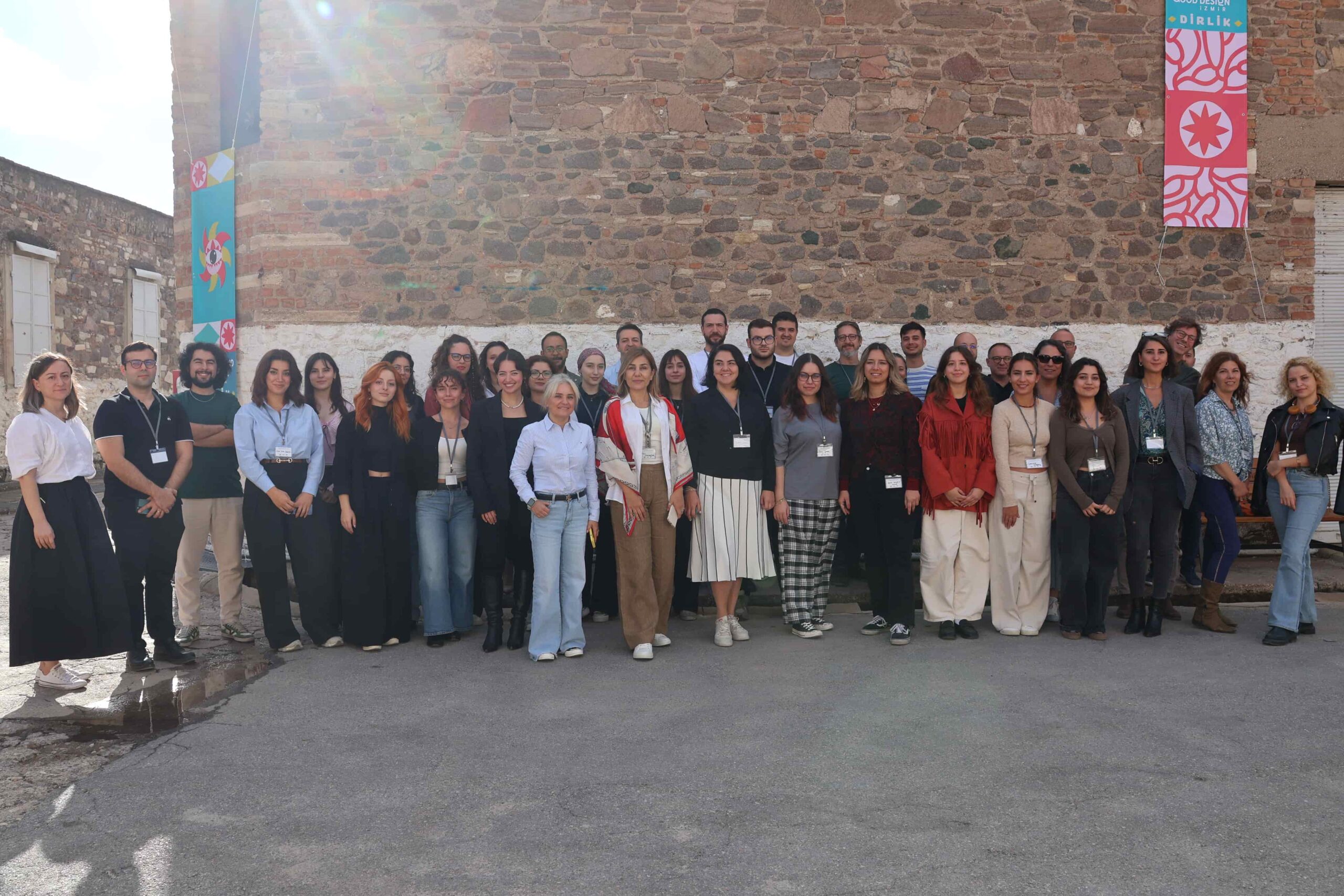
Organized by the Aegean Furniture, Paper and Forestry Products Exporters’ Association and the Industrial Designers Society of Turkey (ETMK) İzmir Branch, the “Design2Prototype: Furniture Eco-Design Workshop” was held at the Historic Bıçakçı Han on 4–5 October 2025 with the support of İzmir Metropolitan Municipality and İzmir Mediterranean Academy.
Bringing together manufacturers, designers, and students, the workshop generated eco-friendly furniture designs suitable for production. Teams made up of five furniture manufacturers and exporters, five professional designers, and industrial design students produced innovative projects based on sustainable material use and circular-economy principles. Each team worked on up to two designs, resulting in a total of 13 concepts. Prototypes of these projects will be produced within three weeks and exhibited at the Historic Bıçakçı Han.
Kemer: “Eco-design Workshop highlights urgent compliance needs”
Müjdat Kemer, Chair of the Furniture Working Committee at the Aegean Furniture, Paper and Forestry Products Exporters’ Association, noted that the Eco-design Regulation has begun to be implemented in Europe with a three-year transition period, after which a Green Product Passport will be mandatory for furniture exports to Europe.
Describing the passport as “a system where all information—how the product is made, its lifespan, how it can be repaired, and ultimately how it will be disposed of—is embedded in a QR code,” Kemer warned: “Companies lacking this system will not be able to export to the EU. Our furniture sector is not yet ready for Eco-design—this is one of our biggest challenges, and unfortunately the sector is not fully aware. A bottleneck is coming for exports to Europe. People think it’s like an ISO 9000 certificate. It is not a certificate; it relates to the company’s entire operating model. Without digitalization, a company cannot have a product passport. The green product passport allows products to move freely in Europe. This is a huge opportunity for us, but we must follow the rules and raise awareness through activities like this. Eco-design requirements apply to Italy, the Netherlands, Spain as well. We want to run workshops frequently to reach that goal. We urgently need design and innovation. Firms that take the leap may face risks, but those that don’t will certainly fail. This also requires financial investment and technology. We are doing our best to alert the industry.”
Çakmak: “The Eco-design Workshop changed my perspective”
Engin Çakmak, Board Member of the Aegean Furniture, Paper and Forestry Products Exporters’ Association and a producer of mattresses, bases, and headboards, said students produced excellent designs and that the two-day workshop made him consider issues he hadn’t thought about before. He added that such events should be held more often.
Underlining their desire for deeper collaboration with designers, Çakmak said: “We’re demanding—we can bring designers into our organization and offer them opportunities. Ultimately, we produce what the market wants, and we can stand out with new and different products. We manufacture mattresses, bases, and headboards. I really liked the new models; they have distinguishing features. We already combine products with appliqués and phone chargers. Here we saw different ideas—there’s even an arm-rested model that feels like a sofa when you lie down. We can produce that; we have the capability, and we believe it will sell. We’ve entered a new world and are eager to invest boldly. In two days my outlook changed. We have an additional 3,000 m² area in our factory; we want to enclose it and produce special, project-based products there—essentially a prototyping lab where we can test new projects.”
Güvenir: “The workshop will make tangible benefits more visible”
Good Design İzmir Curator Can Güvenir emphasized that, unlike concept-only design competitions, this workshop involved producers and fostered collaboration geared toward deliverables. “The tangible benefits will be more visible. Factories will be visited, and partnerships will be long-term,” he said.
Observing that “the furniture industry needs to produce and sell products,” Güvenir continued: “There’s also a social dimension; it’s a labor-intensive sector whose raw material is human effort. People must earn to feel good. Are we protecting nature or polluting it? Resources are limited; we must produce high-quality products from limited resources. That’s why we must source raw materials from recycled content. The EU pushes us because resources are scarce. Good Design has been held ten times; it’s a discipline embraced by İzmir, encouraging good design. Design should be an interface that respects nature and people while targeting economic welfare. The EU is on the brink of transformation. Export-oriented industrial firms believe they can smooth the transition by working with designers. This event will yield outcomes that can be commercialized. We want to showcase İzmir’s creative and design side—both domestically and abroad—through cross-disciplinary, cross-generational, and cross-sector collaboration. We see this workshop as the starting point for cooperation among the furniture, export, and design sectors.”
Onur: “Designers in İzmir can stand out in Europe, too”
Ezgi Ezdar Onur, Vice President of the Industrial Designers Society of Turkey and Head of the İzmir Branch, said one of their primary goals is to bring more designers into the sector, thereby strengthening industries’ design capacity.
“Our companies saw in this workshop that they can access designers in the Aegean Region who can create designs that stand out even in Europe,” Onur said. “When you want to compete through innovation, design is a powerful lever. These workshops lay the groundwork for sectoral collaboration—exporters, universities, and designers come together. Firms unfamiliar with design—or newly discovering it—see firsthand how designers work and how to benefit from them, including how to gain commercial differentiation. Spreading good design is one of our aims, so ensuring high-quality outcomes is a priority. We also involved professional designers to mentor younger participants, conveying briefs received from companies.”
Breaking down prejudices with hands-on work
Onur added that a key aim in product development is to mediate the relationship between people and products: “We do this by understanding real user needs, empathizing, and creating solutions that address them. If it’s a mattress, we question how it can be more comfortable and ergonomic to produce user-appropriate outcomes. The designer’s role is critical. Companies must understand their target markets well. I see this workshop as a major starting point for spreading design across the sector. Design is a profession learned by doing; no matter how much we talk, firms truly grasp the difference when they experience working with designers. We’ve heard directly that prejudices are being broken—companies are beginning to understand whether design really makes a difference and how designers add value. We’ve launched a strong alliance among universities, exporting firms, and our professional design body. We believe we’ll collaborate on even more impactful projects going forward.”
Durmaz: “Five teams delivered 13 designs”
Didem Durmaz, Vice President of ETMK İzmir Branch, said five teams produced 13 designs at the workshop. Companies will handle prototype production; students will visit factories during production to participate and gain insight into the conversion of a design into a finished product.
“There are many gains here,” Durmaz noted. “For companies, it’s the chance to add new design products to their ranges. For students—those who haven’t worked in furniture or have but haven’t seen production—it’s an opportunity to work with manufacturers and professionals. We also saw new collaborations forming—with mentors, visitors, the Good Design team, and members of the exporters’ association—opening doors to future opportunities. Sustainability was our first criterion in the designs. We also considered companies’ specific requests. When selecting firms, we aimed for variety—an office-furniture maker, a mattress company, a baby-products company—so the exhibition would show the full spectrum. That’s why you’ll see very different products in the show. After the three-week prototyping period, we’ll open the exhibition at the Historic Bıçakçı Han. We also observed that this process could lead to internships and job opportunities for some students.”