

The economic outlook for Germany’s furniture industry, one of Europe’s major furniture manufacturing centers, remains weak in 2026. According to preliminary official figures released by the German Furniture Industry Association (VDM/VHK), industry revenue declined by 2.6% to approximately €11.4 billion in the first nine months of the year. Weakening domestic demand, rising production costs and international competition continue to deepen the industry’s downturn, with kitchen furniture emerging as the only product category to record growth. The 10% decline in upholstered furniture manufacturers’ revenue highlights the scale of the challenges facing the sector.
Figures published by the German Furniture Industry Association (Verband der Deutschen Möbelindustrie, VDM) on November 17, 2026, indicate that demand conditions in Germany’s furniture industry have yet to show signs of a sustained recovery.
During the January–September 2026 period, total industry revenue reached approximately €11.4 billion, representing a 2.6% decline compared with the same period of the previous year. The decrease in domestic sales was particularly notable.
In the first nine months of the year, domestic sales fell by 4% to approximately €7.4 billion. Export revenue, meanwhile, remained relatively stable at around €4 billion, recording a marginal increase of 0.1%.
As a result of these differing domestic and international market trends, the industry’s export share increased by one percentage point to exceed 35%.
Jan Kurth, Managing Director of VDM, stated that manufacturers continue to feel the effects of weak consumer confidence.
According to Kurth, rising costs, competition from Asian imports, stagnation in residential construction and growing regulatory obligations are among the main factors placing pressure on German furniture manufacturers.
Kitchen Furniture Records Growth While Other Product Categories Decline
Developments across the German furniture industry’s subsectors show that the downturn has not affected all product categories equally.
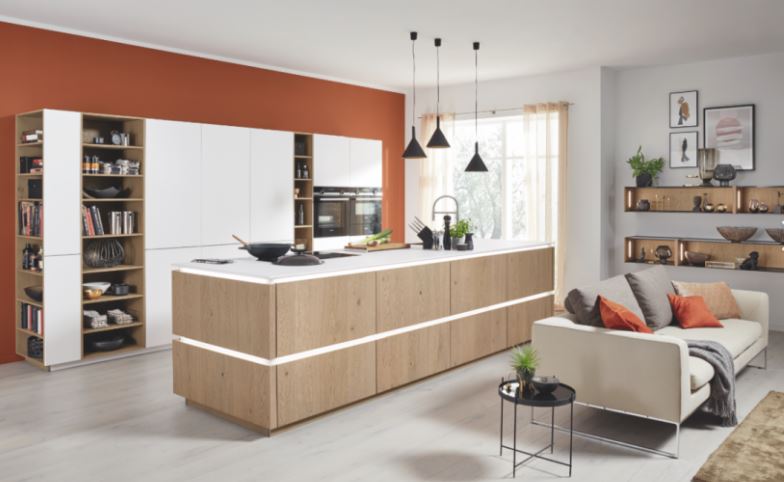
During the January–September 2026 period, kitchen furniture manufacturers increased their revenue by 1% to approximately €4.3 billion. Kitchen furniture was therefore the only product category to achieve growth despite the industry’s overall negative performance.
By contrast, sales in the other furniture category, which includes living room, dining room and bedroom furniture, declined by 5.2% to €3.35 billion.
The sharpest decline occurred in the upholstered furniture sector. Revenue in this category, which includes sofas and similar products, fell by 10% year on year to €594 million.
Office and shop furniture manufacturers recorded a 2.7% decrease in sales to approximately €2.9 billion, while mattress manufacturers reported revenue of around €300 million, representing a decline of 4.8%.
Developments in the upholstered furniture sector are also consistent with a survey published in September by the German Upholstered Furniture Industry Association (VdDP).
According to the association’s industry survey, more than two-thirds of participating companies did not expect a significant recovery in demand during the second half of 2026.
The same survey indicated that approximately 60% of businesses had made use of short-time working arrangements during the third quarter.
Manufacturers identified rising material costs as another major challenge alongside weak consumer demand.
Consumer Confidence Remains Low as Major Purchases Are Postponed
Weak consumer confidence, considered one of the main drivers of the German furniture market’s contraction, is also reflected in independent research.
According to the consumer climate survey published on October 28, 2026, by the Nuremberg Institute for Market Decisions (NIM), based on GfK data, Germany’s consumer confidence indicator for November 2026 stood at -30.8 points.
The indicator had been -30.6 points in the previous month and -22.5 points one year earlier.
Therefore, despite some signs of improvement in economic expectations, consumers’ overall willingness to spend remains weak.
The research particularly highlighted declining purchasing intentions for high-value items such as furniture and electronic appliances.
In October, the indicator measuring consumers’ willingness to make major purchases fell to -11.9 points, while uncertainty surrounding income and inflation expectations continued to constrain spending decisions.
The survey, conducted by NIM among approximately 2,000 consumers, demonstrates that improving optimism about the economic outlook has not yet translated into a comparable increase in actual purchasing behavior.
This is particularly important for understanding why demand remains weak for furniture products that consumers generally intend to use over extended periods.
Stagnation in Residential Construction Affects Furniture Demand
The German Furniture Industry Association believes that a recovery in the sector will depend significantly on renewed activity in residential construction.
VDM Managing Director Jan Kurth stated that fewer homes being built and a decline in household relocations directly affect demand for new kitchens and furniture.
Figures published by the German Federal Statistical Office (Destatis) on November 18, 2026, also reveal the fluctuating conditions in the housing market.
According to official statistics, building permits were issued for 20,800 residential units across Germany in September 2026, representing a 14.8% decline compared with the same month of the previous year.
However, the broader picture for the year is not defined solely by September’s decline.
During the January–September 2026 period, building permits were issued for a total of 190,200 residential units in new and existing buildings.
This represented an 8.4% increase in the number of permitted residential units compared with the same period of 2025.
Nevertheless, an increase in building permits does not necessarily mean that the homes have been completed during the same period or that furniture demand has immediately increased.
It can take time for building permits to translate into actual construction activity and completed residential properties.
Kurth argues that revitalizing the housing market requires not only faster permitting procedures but also improved investment conditions, broader financing opportunities, lower construction costs and stronger support for new residential developments.
Developments in the housing market are relevant not only to furniture manufacturers but also indirectly to businesses supplying wood-based panels, furniture components and interior fittings used in kitchen and bathroom furniture.
Number of Companies and Employment Decline in the German Furniture Industry
The deterioration in the industry’s economic conditions is also reflected in manufacturing capacity and employment figures.
According to statistics released by VDM, the number of German furniture manufacturers employing at least 50 people declined by 6.2% to 373 companies during the first nine months of 2026.
Employment within the same group of manufacturers fell by 5.4% to 64,755 people.
The contraction in the furniture industry was therefore not limited to declining sales revenue. The reduction in the number of businesses and the loss of jobs also indicate a shrinking industrial production base.
According to figures previously published by VDM, approximately 400 furniture manufacturers employing at least 50 people generated total revenue of €15.8 billion in 2025.
During that period, industry revenue had declined by 3.4% compared with the previous year.
These figures demonstrate that the contraction in Germany’s furniture industry is not unique to 2026 but forms part of a downward trend that continued from the previous year.
Import Competition Intensifies as Furniture Imports from Türkiye Also Decline
Increasing international competition remains one of the major challenges facing German furniture manufacturers.
According to VDM’s first-half assessment published on September 1, 2026, Germany’s furniture imports declined by 4.3% during the first six months of the year. Nevertheless, imported products continued to account for a substantial share of the market.
According to the association’s calculations, approximately 60% of furniture sold in Germany during the first half of 2026 consisted of imported products.
This compares with an import share of 44% in 2019.
China and Poland remained Germany’s two largest furniture suppliers. Together, the two countries accounted for approximately 60% of total furniture imports.
During the same period, imports from China declined by 2.4%, while those from Poland decreased by 1.5%.
VDM also reported declines in furniture imports from Italy, Türkiye, Vietnam and Romania.
However, the association’s statement did not provide separate import volumes or percentage changes for Türkiye.
These developments indicate that Germany remains an important market for Turkish furniture manufacturers to monitor.
Weak domestic demand and intense price competition may also affect sales conditions for manufacturers exporting products from Türkiye to Germany.
Nevertheless, the competitive pressure facing German manufacturers does not automatically translate into increased market share for foreign suppliers.
Declining import figures suggest that demand conditions in Germany may also present challenges for international suppliers.
Europe’s New Sustainability Regulations Remain on Manufacturers’ Agenda
Another issue receiving considerable attention from the German furniture industry is the European Union’s regulations concerning sustainability and product information.
In a statement issued on November 16, 2026, the German Kitchen Furniture Industry Association (VdDK) called for a more realistic implementation timetable for furniture-specific rules to be developed under the European Union’s Ecodesign for Sustainable Products Regulation (ESPR).
While supporting sustainability objectives, the association stated that common assessment methods for product service life, repairability and environmental performance have not yet been sufficiently developed.
The detailed furniture-specific regulations planned for 2028 and the introduction of Digital Product Passports (DPP) could require businesses to make additional preparations in their production and information management processes.
Manufacturers are calling for longer transition periods and the development of harmonized technical methods that businesses can use to meet the new obligations.
Although the final content of these regulations has not yet been determined, product traceability, durability, repairability and sustainability are becoming increasingly important issues for the European furniture industry.
Industry Revenue Expected to Contract by 3% in 2026
Following the results for the first nine months of the year, the German Furniture Industry Association maintained its previous forecast for 2026.
VDM Managing Director Jan Kurth stated that the association expects total industry revenue to decline by approximately 3% for the full year.
According to VDM’s assessment, there are still no clear signs of a significant short-term recovery in furniture demand.
In particular, weak domestic consumer spending, uncertainties surrounding residential construction and production costs may continue to shape the industry’s outlook in the coming period.
Nevertheless, the modest growth recorded in kitchen furniture and the relative stability of export sales demonstrate that not all product categories are being affected by the same market conditions.
The German furniture industry’s performance in 2026 highlights the importance of evaluating demand patterns, consumer expectations and production costs together, both for European manufacturers and international suppliers.
For Türkiye’s furniture and forest products industries, developments in the German market also represent important indicators that should be closely monitored, particularly when assessing commercial prospects for furniture manufacturing, wood-based panels, decorative surfaces, furniture components and production technologies.