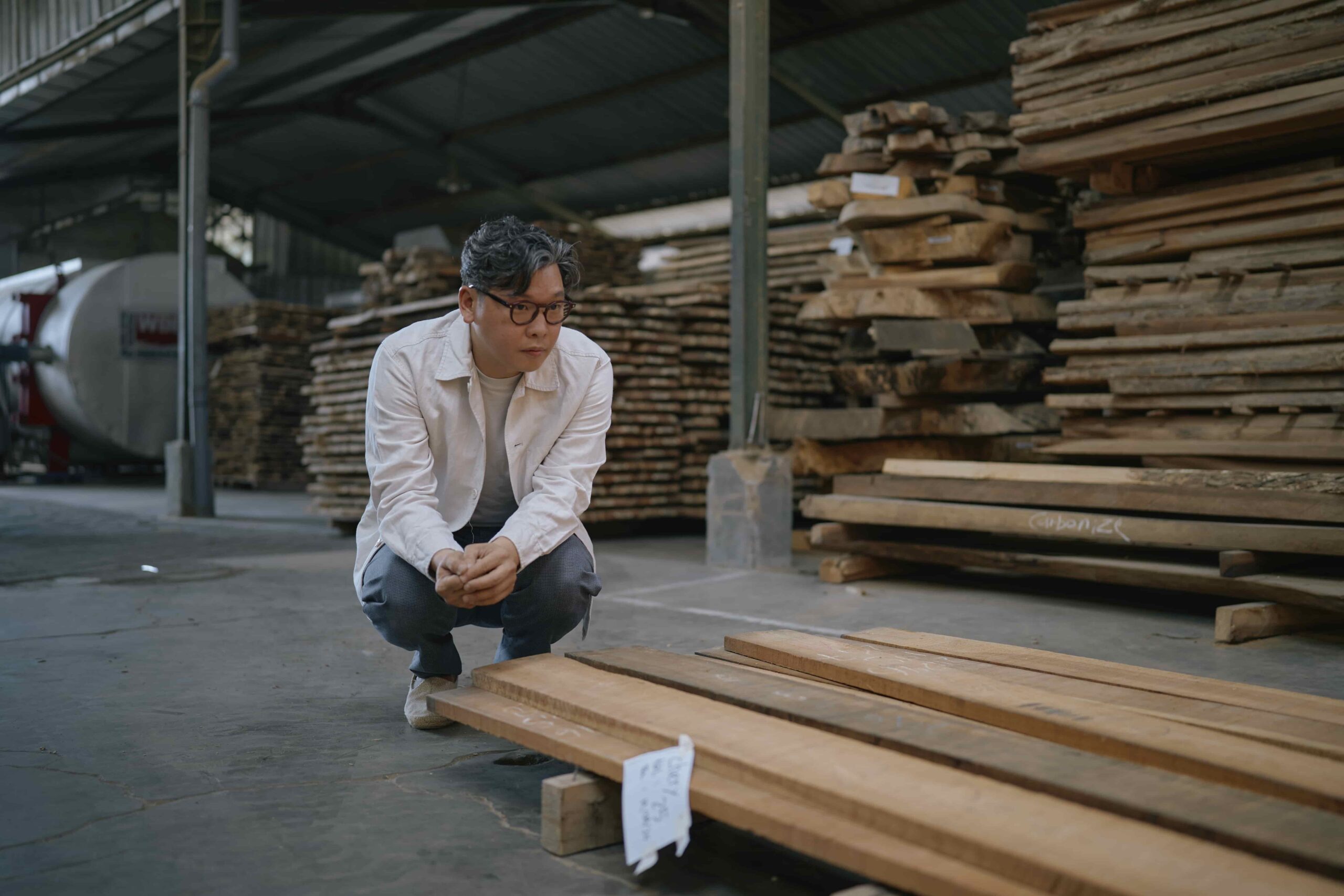
The American Hardwood Export Council (AHEC) and leading Indonesian designer Hendro Hadinata unveiled the KARANA Collection at Indonesia Design Week in September 2025, showcasing the potential of sustainable American hardwoods.
For Hadinata, the project was not merely a new collection; it was a journey into how material choice can transform the design process. Having previously worked mainly with local species, the designer engaged for the first time with American cherry and American red oak, encountering both new challenges and opportunities. “Working with American hardwoods was an instructive experience for us. The distinctive hardness, grain and color profiles of these species pushed us to learn in-depth. At the same time, it helped us imagine how American hardwoods could be used more creatively in both indoor and outdoor furniture in the future,” Hadinata noted.
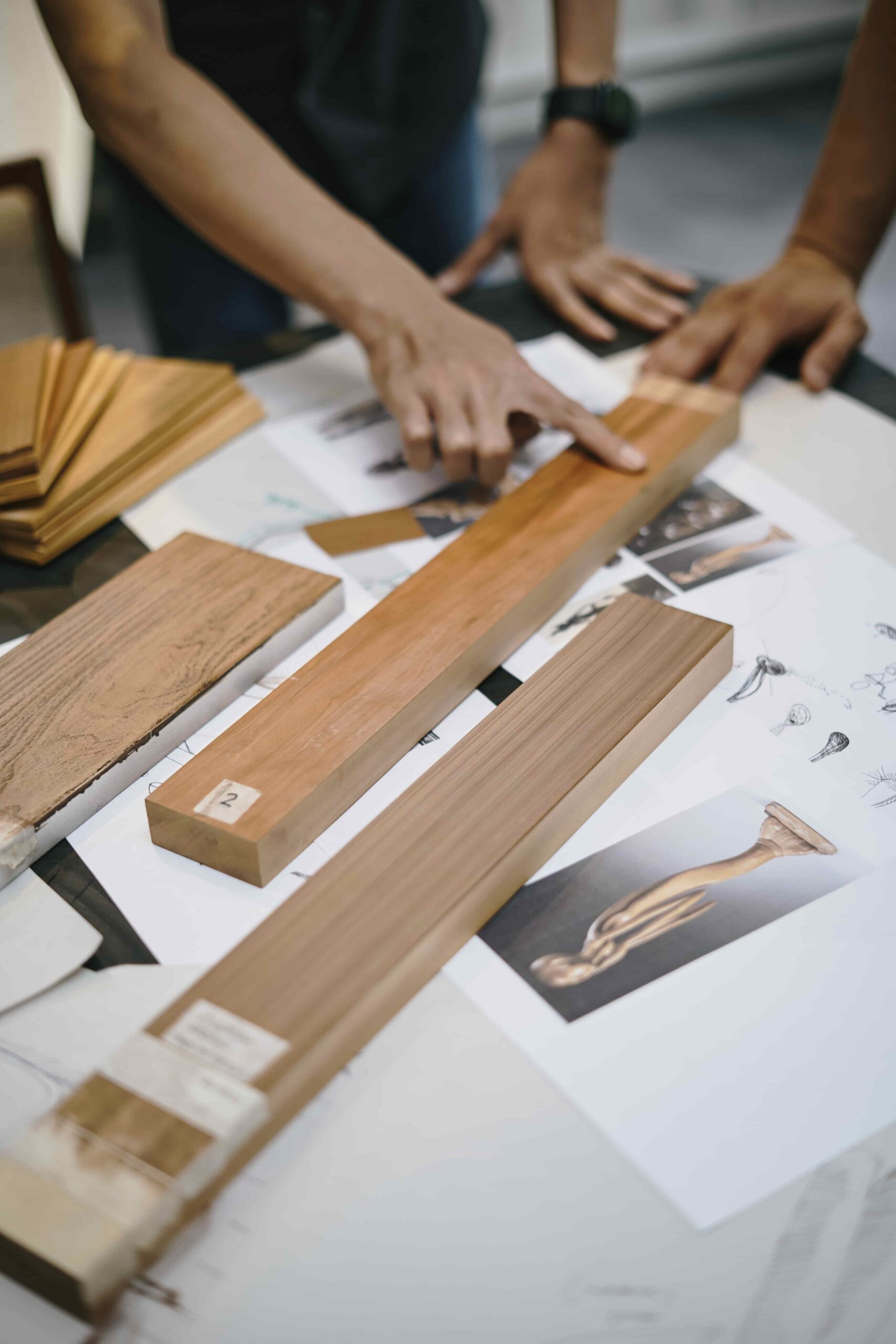
American red oak (Quercus rubra)—the most abundant species in the U.S. hardwood forests—stood out for its strength, durability, and boldly open grain with warm pink-red hues. Thanks to its excellent machinability and responsiveness to a range of finishing techniques, it offered an ideal canvas for craftsmanship and artistic expression. Native to North America, American cherry (Prunus serotina) earned high praise for its smooth texture and for the deepening, reddish-brown color it develops over time. Together, the two species gave Hadinata expressive flexibility—enabling sculptural curves while preserving the wood’s natural integrity.
American hardwoods are among the world’s most sustainable design materials. They are sourced from naturally renewing forests that make up one of the planet’s largest and most diverse temperate hardwood resources. Managed for generations through selective harvesting, the total standing volume has more than doubled since the 1950s. Annual growth consistently exceeds harvest, ensuring long-term resource security.
Independent studies confirm that the risk of illegal wood entering the American hardwood supply chain is below 1%, while Life Cycle Assessment (LCA) data demonstrates exceptionally low environmental impacts for these species. Moreover, across harvesting, processing and transportation, American hardwoods store more carbon than the emissions generated—delivering a net carbon benefit to nature.
Partnership with Indonesian manufacturer Omega Mas was also pivotal to the collection’s success. The artisans’ precision and commitment imbued the pieces with technical excellence and soul. “The Omega Mas team was highly responsive and passionate. They internalized the potential of American hardwoods. For them, every project was not just an assignment but a craft pursued with devotion. This proved once again that good design is only possible with equally dedicated makers,” Hadinata said.
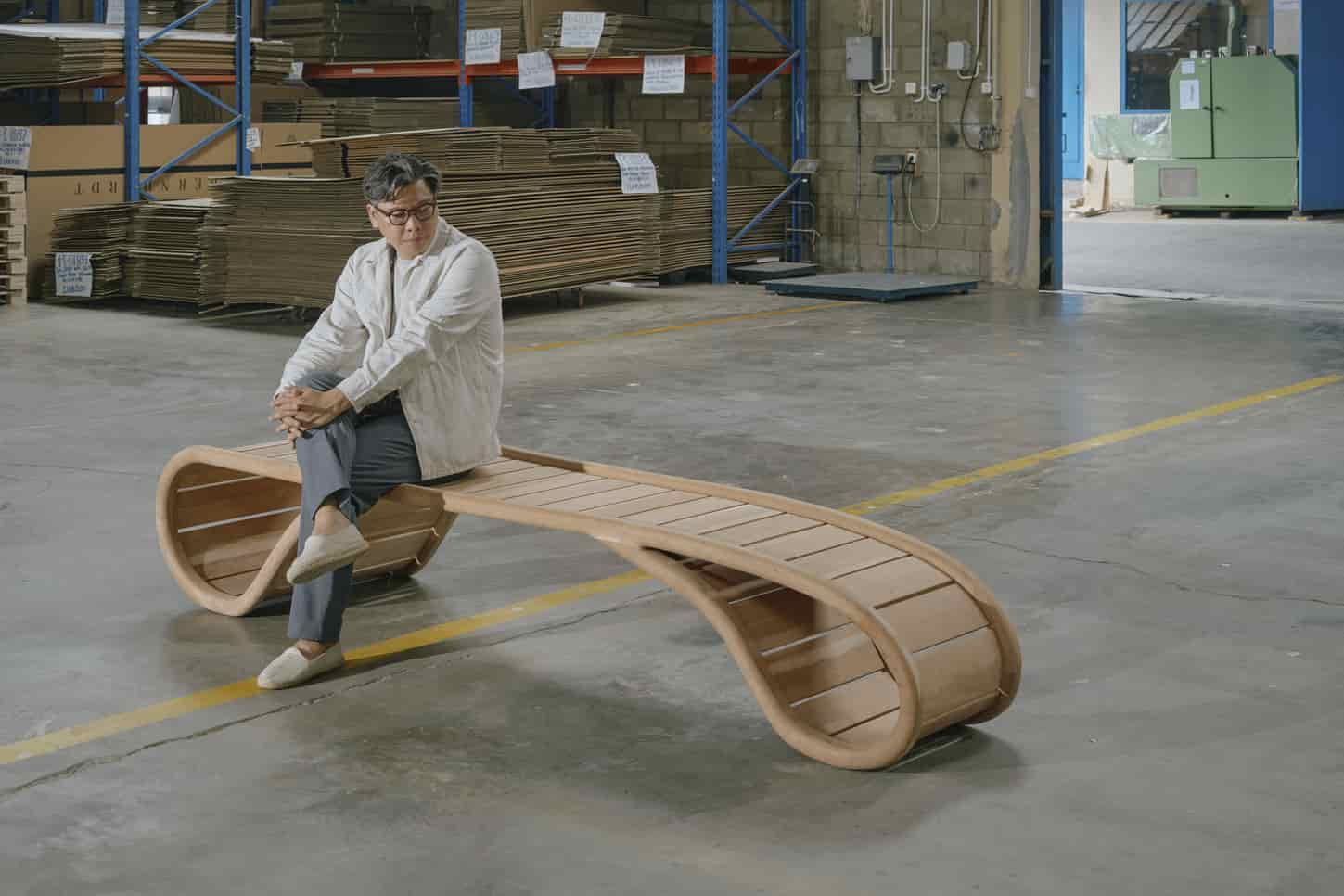
Among the collection’s most technically demanding works, the bench and chaise longue embody meticulous explorations of form and proportion through uninterrupted curves. Achieving these refined lines required not only sharp technical skill but also an intuitive respect for the material. “When we combined the qualities of American hardwoods with skilled craftsmanship, the outcome was not merely a finished product but a new design language,” Hadinata reflected. “This language shows how Indonesian design can engage more deeply with global materials and techniques. American hardwoods brought a new dimension to my practice—their natural beauty, scale, and uniformity are ideal for sculptural expression. The Tri Hita Karana philosophy, in turn, gave each piece cultural memory and contemporary meaning.”
The project underlines AHEC’s continued commitment to fostering creative experimentation with sustainable American hardwoods. As a collaboration that bridges global design innovation with local craftsmanship, the KARANA Collection offers a powerful example of the aesthetic potential of nature-aligned production. The collection was on view 12–20 September 2025 at Indonesia Design Week, PIK2 Indonesia Design District (IDD) – Townhall Area.