

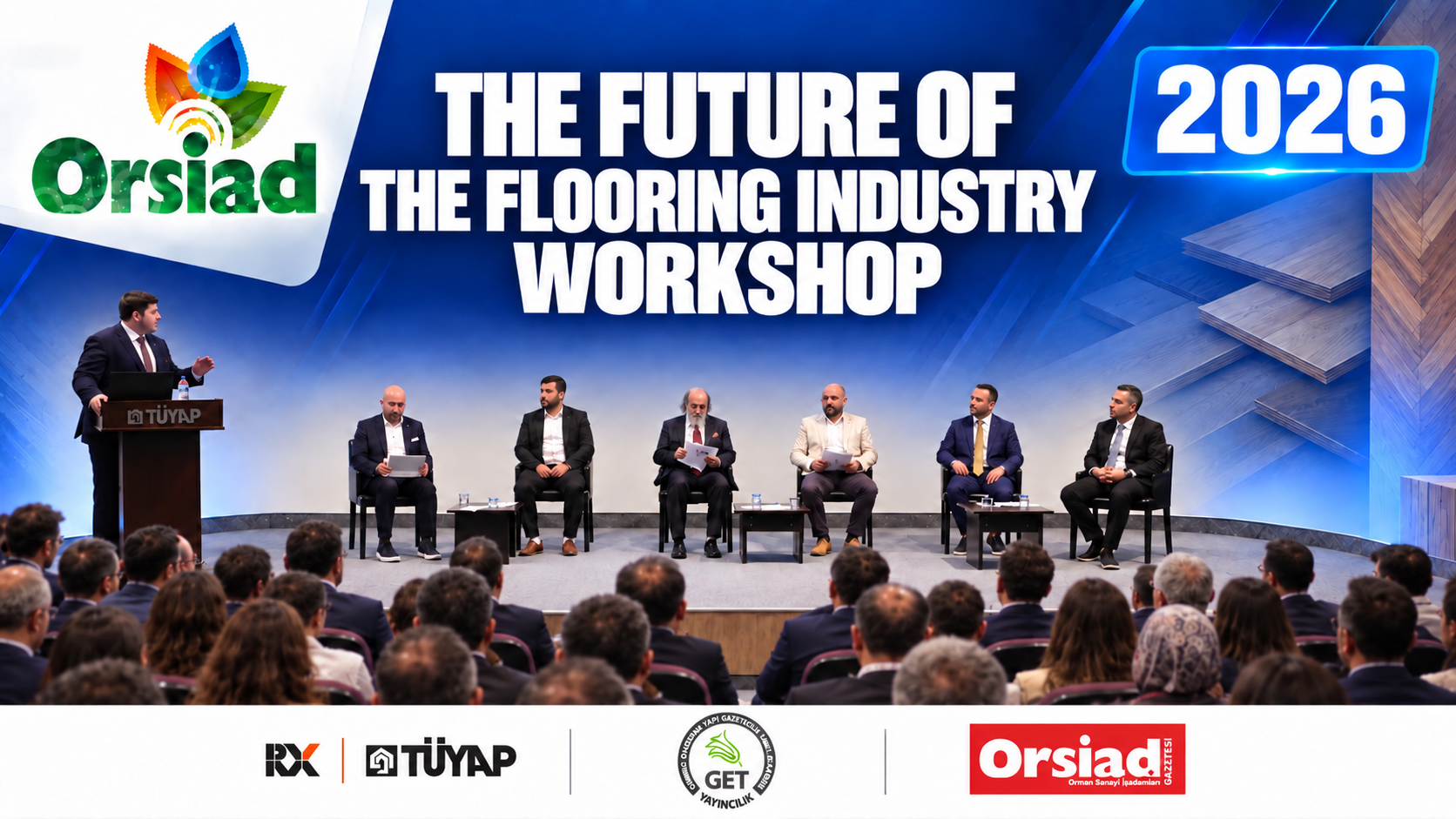
Parquet · SPC · LVT
Organized by: ORSİAD Newspaper
Date: Friday, September 18, 2026, 15:00-17:00
Venue: Karadeniz Hall, TÜYAP Fair and Congress Center, Büyükçekmece, Istanbul
Moderator: Tarkan Demir, Editor-in-Chief of ORSİAD Newspaper
Speakers
- Recep Yazganel, Kastamonu Entegre, Türkiye Flooring Sales Manager, representing YOMSAD
- Özkan Soylu, Flooring Installers Association, Chairman of the Board
- Necati Yılmaz, Aspen Yapı ve Zemin Sistemleri A.Ş., General Coordinator, representing Engineered and Solid Wood Flooring Manufacturers
- Görkem Ergüç, Välinge Innovation AB, Key Account Manager, representing Click System Technologies
- Bahtiyar Ceyran, Classen Int. GmbH, Sales Director for Türkiye, Middle East and Africa, representing Imported Flooring Companies
- Metehan Kart, Area Floors, Regional Export Manager, representing SPC Manufacturers
(Also taking the floor during the session following an intervention from the audience: Serhat Dayanıklıoğlu, Secretary General of YOMSAD)
Opening
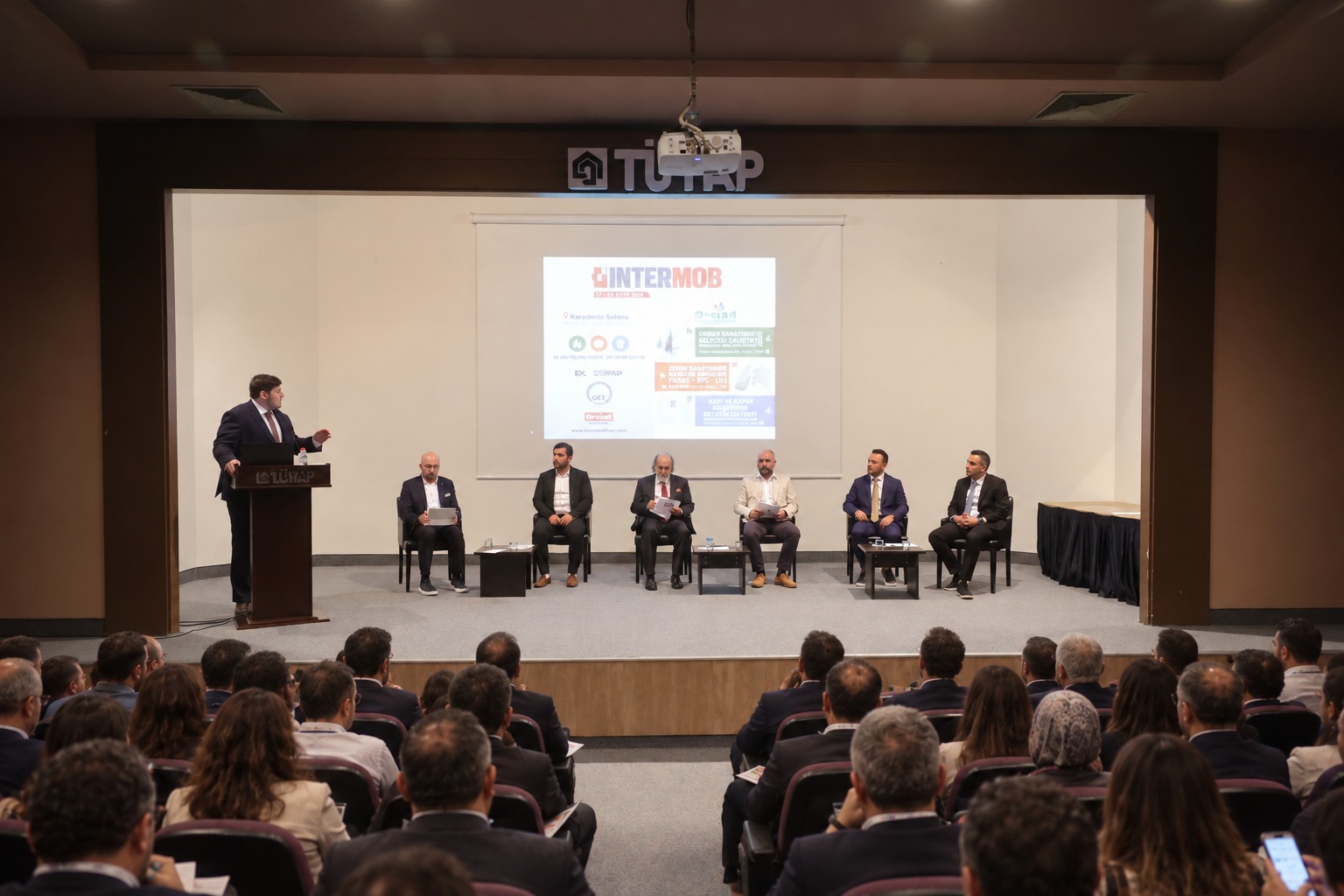
The moderator welcomed the speakers and audience to the workshop. Before the official opening of the program, a moment of silence was observed in memory of Türkiye’s martyrs and veterans, followed by the Turkish National Anthem.
The moderator then provided information about the format. A total of six questions had been prepared, although some might be skipped later in the program due to the two-hour time limit. Each question would be addressed to all speakers in turn.
It was also announced that Bahtiyar Ceyran, representing Classen, had prepared a presentation and would answer most of the questions through this presentation while also providing brief comments during each round.
Before moving on to the first question, each speaker was asked to introduce themselves and the organization they represented.
First Question
“What are your expectations for the sector regarding production, imports and consumption in the final quarter of 2026 and throughout 2027? Could you share your outlook?”
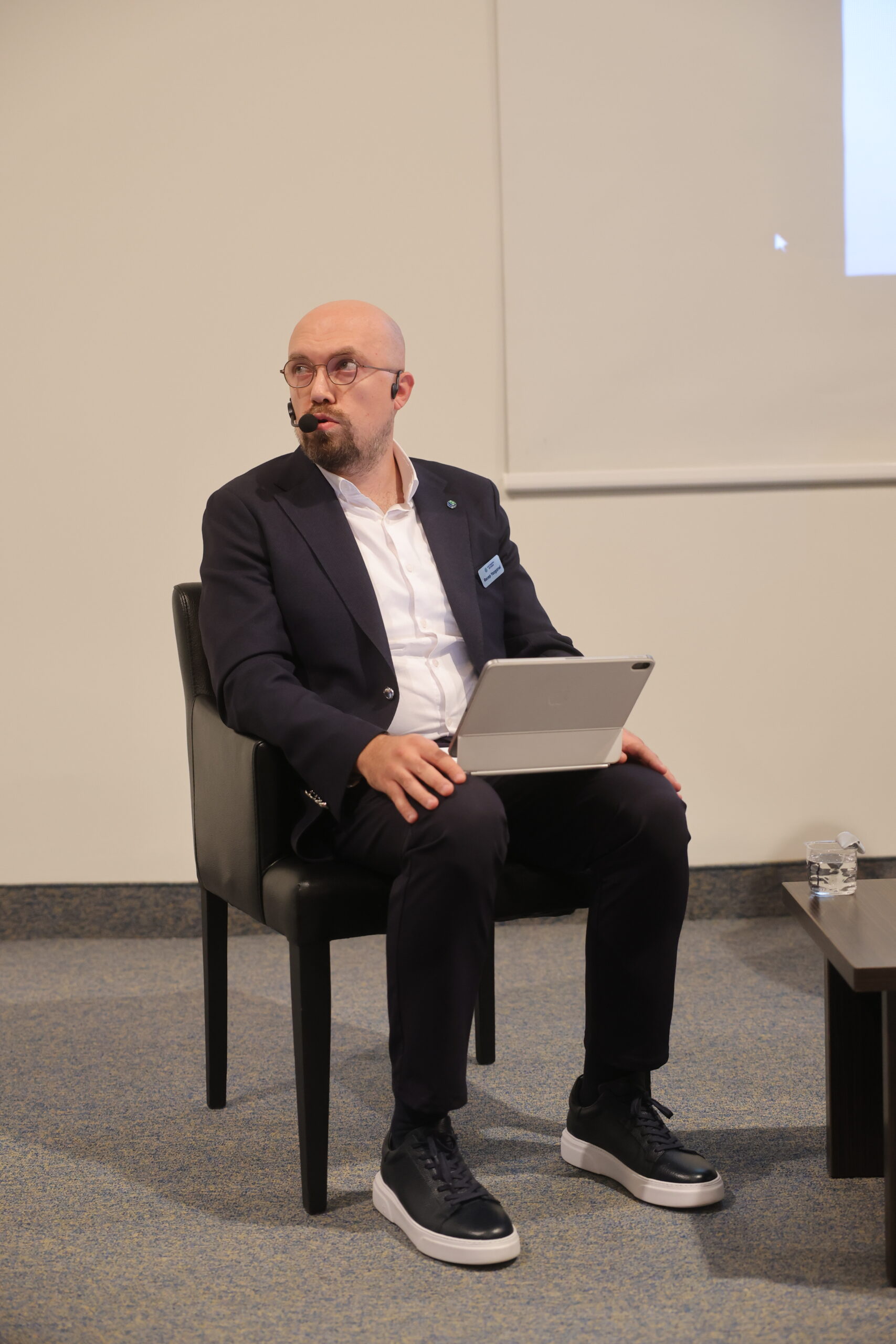
Recep Yazganel, Kastamonu Entegre / YOMSAD
Recep Yazganel introduced himself as a professional with more than 20 years of industry experience who has worked at Kastamonu Entegre for 12 years and has been responsible for Türkiye Flooring Sales Management for the past year.
According to 2025 data, approximately 135 million m² of flooring was produced by domestic manufacturers in Türkiye. Of this volume, 45 million m² was exported while the remaining 90 million m² was absorbed by the domestic market.
He added that they estimate imports at approximately 1 million m².
He noted that the domestic market also includes alternatives such as solid wood flooring, engineered wood flooring, SPC and LVT. Solid and engineered wood products address the higher-end segment while SPC and LVT have emerged as next-generation flooring solutions that have gained significant ground globally in recent years.
Nevertheless, he emphasized that laminate flooring continues to be the dominant product category in Türkiye.
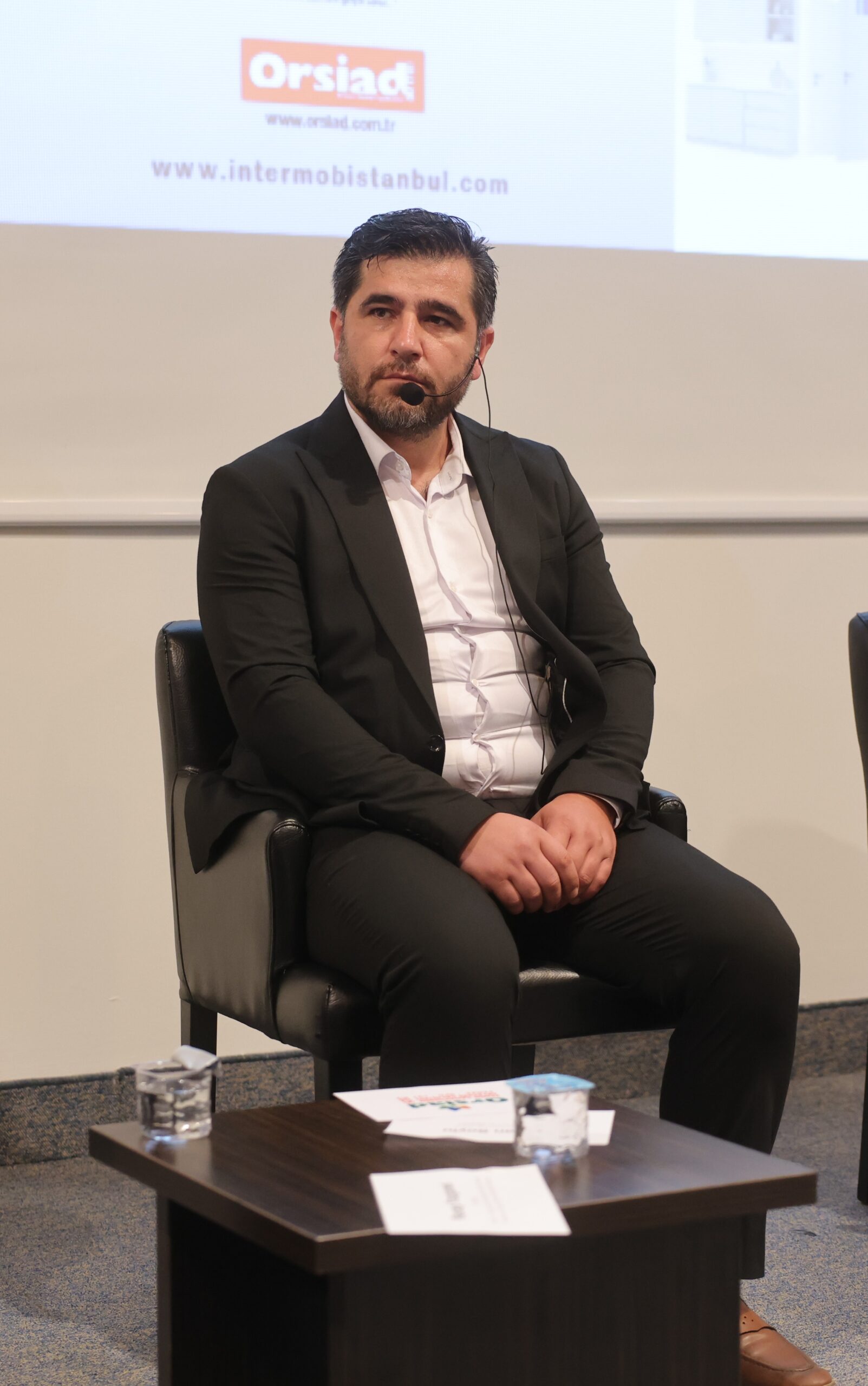
Özkan Soylu, Flooring Installers Association
Özkan Soylu introduced himself as having served as Chairman of the Flooring Installers Association for approximately three and a half years.
Regarding the industry outlook, he stated that conditions were less predictable than in previous years due to the contraction caused by current economic conditions. However, he observed that the market is currently going through a period in which laminate flooring and SPC are increasingly prominent.
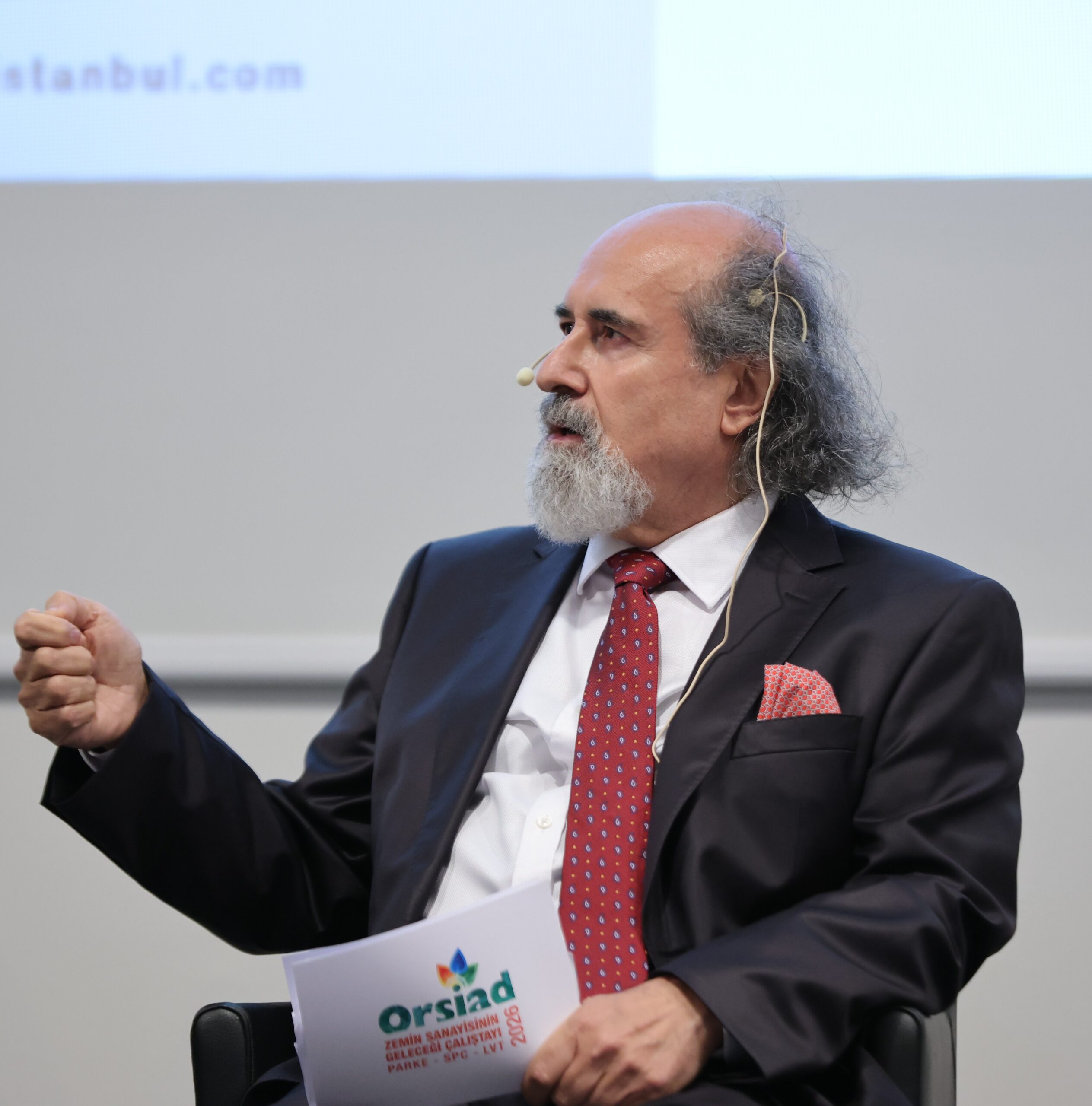
Necati Yılmaz, Aspen Yapı / Engineered and Solid Wood Flooring Manufacturers
Necati Yılmaz introduced himself as General Coordinator representing Aspen Yapı Malzemeleri. He has worked at the company for 17 years and has been active in the flooring industry for 45 years.
He stated that Türkiye’s engineered wood flooring market has remained between 3 and 3.5 million m² for many years. Demand has recently begun to decline somewhat and he expects this downward trend to continue through the first quarter of 2027.
He attributed this to the housing inventory accumulated by developers.
While an average of 750,000 to 800,000 building permits are issued annually, average first-hand housing sales over the past four to five years have remained at only around 450,000 to 500,000 units. Consequently, developers have accumulated housing inventory corresponding to approximately 30-35 percent of annual production.
He explained that this does not eliminate flooring demand but postpones it because by the time a construction project reaches the flooring stage, approximately 80 percent of the overall construction cost has already been incurred.
He predicted that this postponed demand would begin to return once interest rates decline.
He also noted that financial pressure has led consumers toward more affordable product segments, such as three-strip planks.
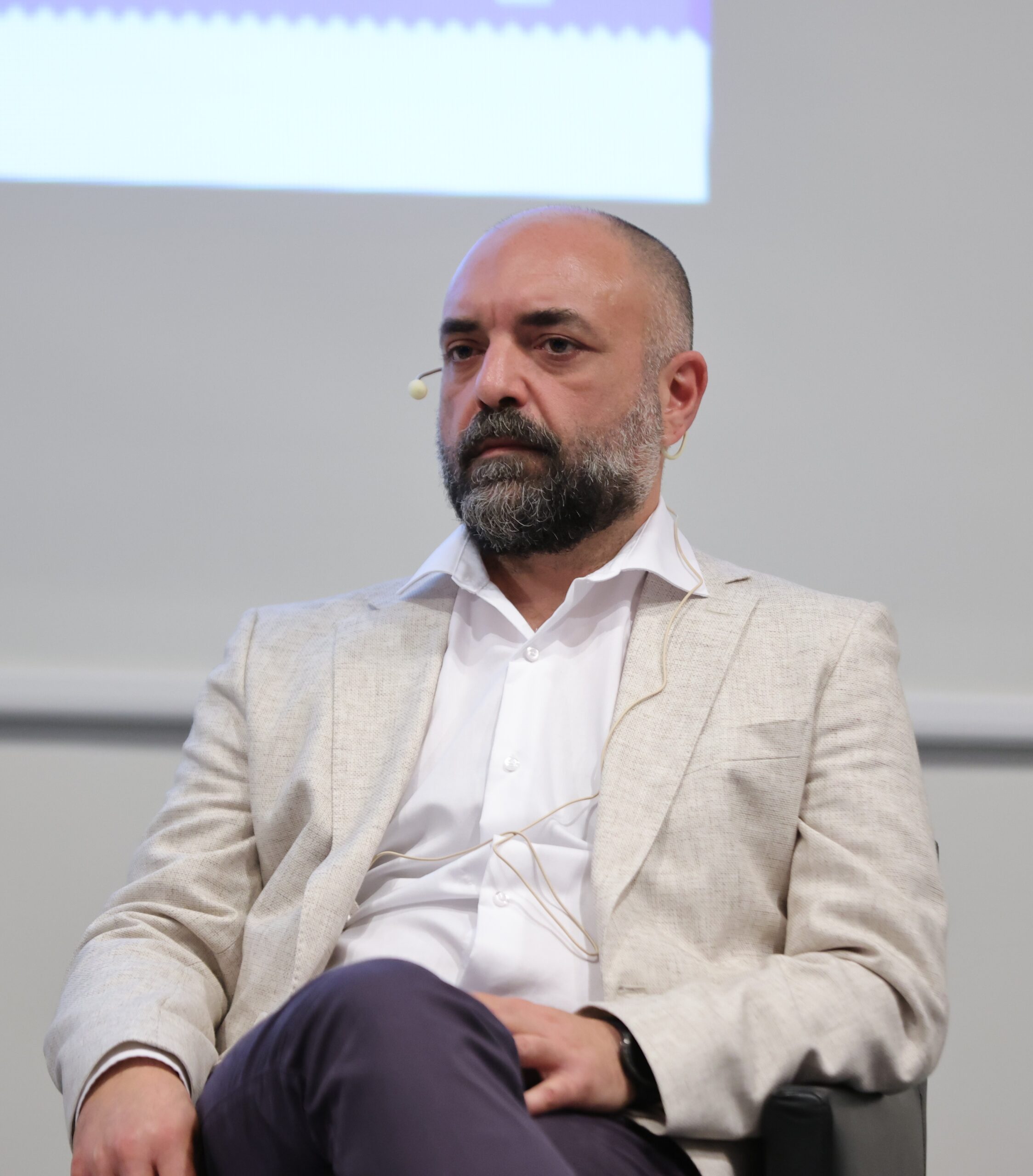
Görkem Ergüç, Välinge Innovation
Görkem Ergüç introduced himself as Southern Europe Sales Manager at Sweden-based Välinge Innovation.
He stated that Välinge is one of the world’s largest flooring technology providers with more than 300 licensed manufacturers and over 3,500 active patents, most of them related to locking systems.
He explained that he would assess the Türkiye market from a somewhat more external perspective since he was not as familiar as the other participants with all of Türkiye’s specific opportunities and challenges. He added that he expected to learn a great deal from the workshop.
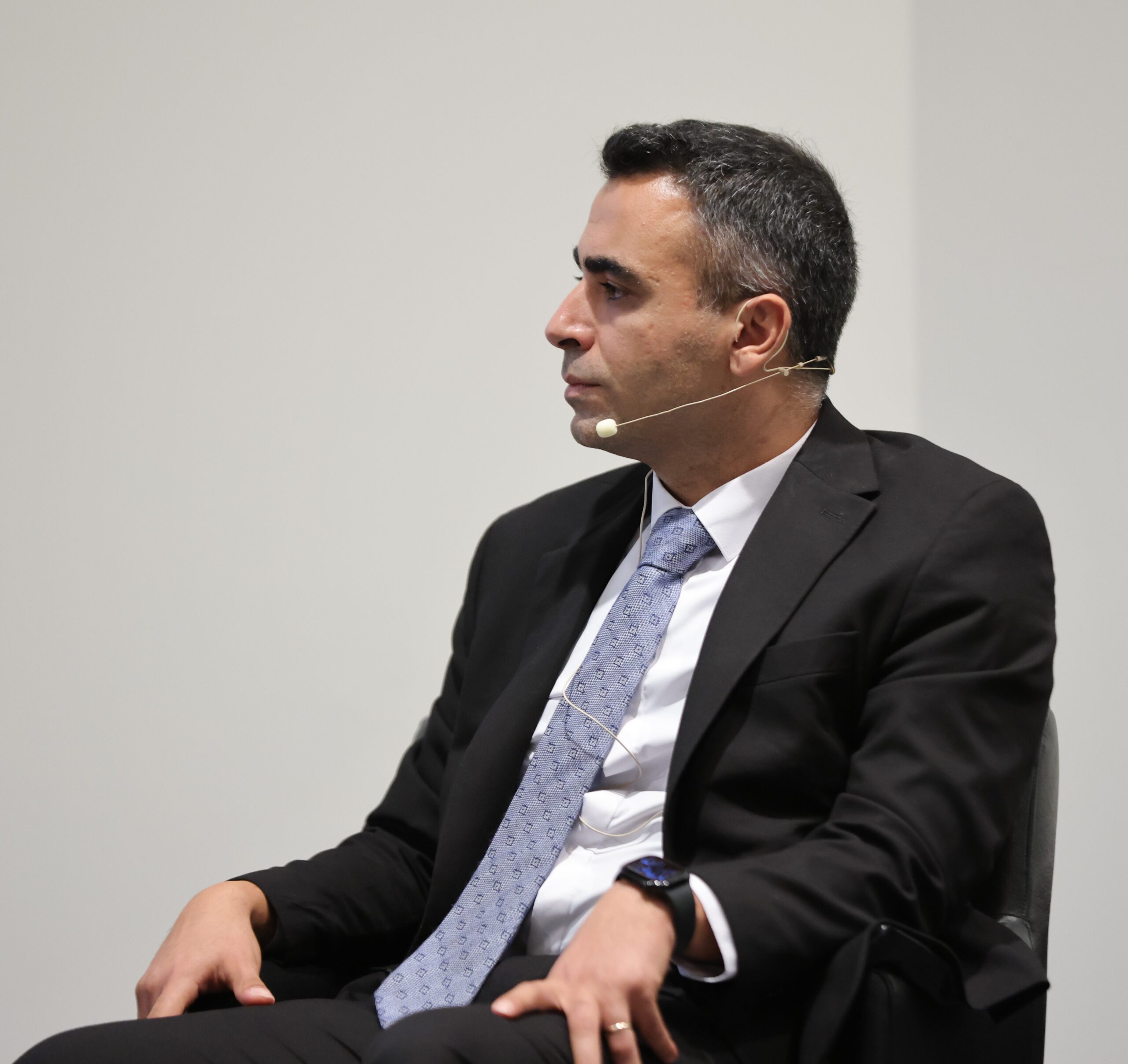
Metehan Kart, Area Floors / SPC
Metehan Kart introduced himself as having worked in exports for 13 years across different industries and in the flooring industry for the past six years, initially at Pel Park and currently at Area Floors in exports of SPC flooring and wall panels.
He explained that Area Floors was established in Istanbul in 2021 and entered production by closely following trends in Europe and North America. Within five years, the company had developed into a business exporting 90 percent of its sales.
He stated that the industry has experienced fluctuations for many years. While 2026 began positively, business had slowed significantly during the previous one to two months, partly due to declining housing permits.
He described SPC as neither a very old nor an entirely new product globally. In Türkiye, however, the category has not yet completed its market penetration and is currently used more frequently in renovation projects than in new construction.
Although its volume remains far smaller than that of laminate flooring, he emphasized that SPC is on a growth trajectory.
He expects the next three months to remain slow. In 2027, depending largely on interest rates, the industry will either begin to recover or continue moving at a slower pace.
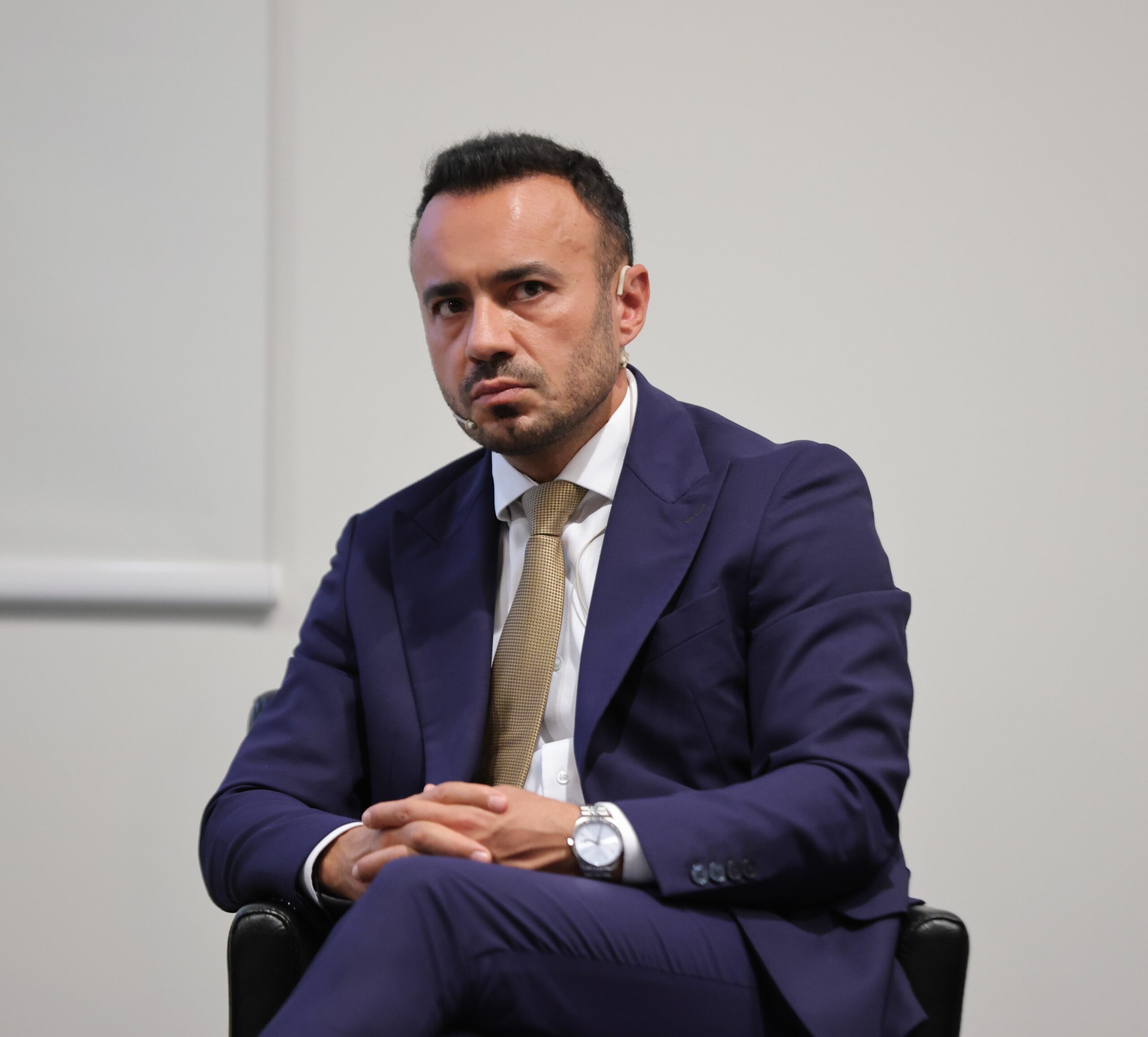
Bahtiyar Ceyran, Classen, Presentation
Presentation Content:
Bahtiyar Ceyran introduced himself as Levent Bahtiyar Ceyran.
Between 2007 and 2014, he was responsible for imports at a Türkiye-based company. In 2014, he joined Classen Group and since then he and his team have managed sales activities from the Istanbul office across Türkiye, the Middle East and Africa, covering approximately 35 countries.
He explained that Classen is a German family-owned company ranked among Germany’s 500 largest companies.
The company has an installed laminate flooring production capacity of 110 million m² and an installed polymer flooring capacity of 20 million m². Its polymer products are PVC-free SPC solutions based on polypropylene.
Ceyran stated that his presentation had been structured to collectively address all of the workshop questions and proceeded through the following main topics.
View on Product Competition
He argued that no single product will dominate the market in the future. Each category, including SPC, laminate flooring and engineered wood flooring, will continue to exist within its own areas of application.
The Market Data Problem
He emphasized that it is currently impossible to determine the actual size of Türkiye’s laminate flooring market.
EPLF, European Producers of Laminate Flooring, data only covers its member companies while sales volumes generated by major manufacturers such as Kastamonu Entegre and Yıldız Entegre cannot be independently measured.
He proposed this as one of the workshop’s central agenda items. Common parameters, data sources and stakeholder cooperation should be developed to establish reliable market measurement.
Product Classification and Quality Standards
Ceyran argued that products should not be classified solely according to price and performance but according to their intended areas of use.
Quality should also be linked to common standards established by independent institutions covering factors such as surface abrasion, locking systems and water resistance.
Sustainability
He stated that sustainability is not yet discussed sufficiently in Türkiye but has already become one of the first evaluation criteria in tenders conducted by home improvement retailers and retail chains in North America and Europe.
He added that Türkiye, given its geographical position, is emerging as an increasingly important player in this area.
Market Data
According to data based on EPLF and MMFA member companies, laminate flooring recorded a slight decline of 3.2 percent from the first half of 2025 to the first half of 2026 while polymer-based products grew by 19.5 percent.
Total polymer flooring sales reached 95.5 million m² in 2025, with SPC accounting for 89.8 percent.
At global level, North America is the primary center of growth.
Although growth in Western Europe remains limited at approximately 3 percent, the region continues to hold the largest market share.
According to EPLF data, the laminate flooring market is expected to reach an annualized volume of approximately 272 million m² in 2026, representing a slight decline compared with the previous year.
Product Comparison, Summary
Laminate flooring stands out through its price-performance advantage.
Solid and engineered wood flooring maintain their position in the premium segment.
SPC and LVT stand out through water resistance and ease of installation, particularly in renovation projects.
From a circularity perspective, laminate flooring is based on sustainably managed forest resources while the sustainability profile of SPC and LVT depends entirely on the raw materials used.
Ceyran stated that 70 percent of all polymer-based products manufactured by Classen are produced using recycled polypropylene and that all of them are 100 percent recyclable.
Import-Production Balance
He recommended diversifying supply sources, improving inventory management, closely monitoring customs regulations and evaluating quality based on the entire product composition rather than simply its entry price.
He also advocated an approach that reduces unfair competition through practical and enforceable standards instead of merely increasing the number of rules.
Certification
Ceyran stated that all Classen polymer products have EPDs while its Ceramin products hold Greenguard certification.
The company’s laminate flooring production also holds Blue Angel, FSC and PEFC certifications.
Architect and Designer Trends
He identified natural and realistic surfaces, larger formats, micro-bevels, acoustic comfort, water and stain resistance, low-emission certification and fast, secure installation as key market criteria.
Proposed Common Industry Agenda for 2027
He proposed:
- A quarterly market panel, with regular data collection led by ORSİAD
- Common quality standards and testing protocols
- Installer training
- Sustainability certification
Additional Comments Following Bahtiyar Ceyran’s Presentation
After the presentation, the moderator invited each speaker to provide a brief additional comment.
Recep Yazganel
Yazganel stated that they attach great importance to installer training and that Kastamonu Entegre has been working to repeat these programs consistently for many years.
He noted that they had conducted intensive training activities across different provinces again this year.
He agreed that Türkiye has a closed culture regarding data sharing and that data is often “kept as if it were a secret.”
He stated that Kastamonu Entegre would be ready to contribute if a platform for greater transparency were established.
He also noted that architects are playing an increasingly active role in product development.
Herringbone patterns are currently a major trend and consumer awareness is increasing. As an example, he noted that consumers now increasingly recognize technical terms such as AC3 and AC4.
Özkan Soylu
Soylu emphasized that installer training is critical.
He argued that high-quality products manufactured by factories are not always installed to the same standard on site and criticized individuals without MYK, Vocational Qualifications Authority, certification who enter the profession simply by declaring themselves installers.
As an example, he described cases in which the wrong underlay, including perforated underlay intended for underfloor heating systems, resulted in moisture accumulation beneath flooring.
He also noted that some manufacturers require a 15 mm expansion gap in their installation manuals while certain spacers available on the market are unable to provide this clearance.
He emphasized that the Flooring Installers Association acts as a bridge between installers and manufacturers.
Necati Yılmaz
Yılmaz reiterated that the absence of reliable statistics is one of Türkiye’s most serious problems.
He noted that even within their own segment, they cannot determine with certainty whether the market is 3 million, 3.25 million or 3.5 million m².
He argued that unfair competition, unregistered production and unqualified workmanship cannot be solved through inspection alone and require broader social awareness.
In the past, particularly during the solid wood flooring era, installers maintained greater price discipline and professional solidarity. Today, he argued, this unity has largely disappeared and contractors offering excessively cheap labor are damaging the market.
He also highlighted the impact of unregistered producers operating low-investment pressing or finishing facilities and low-quality imported products entering the market.
Görkem Ergüç
Ergüç stated that the shortage of qualified installers is not unique to Türkiye but is a global challenge affecting Europe and the United States as well.
He noted that some professional organizations in the United States regularly conduct training programs but still struggle to achieve the desired results.
He emphasized that the concept of “easy installation” does not reduce the value of professional installers.
On the contrary, qualified installers are needed more than ever for issues such as subfloor flatness, moisture levels and technical detailing.
Metehan Kart
Kart reiterated that installation quality is critical to brand reputation.
Even when a product itself is of high quality, incorrect installation can still be blamed on the manufacturer.
He added that in the age of artificial intelligence, manufacturers will increasingly need to sell not only products but also data.
Bahtiyar Ceyran
Ceyran clarified a possible misunderstanding in one of his previous remarks.
He stressed that Türkiye is not “unimportant” as an export market. On the contrary, Türkiye has become so strong in manufacturing that European companies increasingly see it not simply as an export destination but as a production base.
As an example, he stated that he gave a presentation in Germany last year about producing SPC under the Classen brand in Türkiye.
In January 2026, negotiations were conducted concerning three factories in Sakarya covering more than 20,000 m².
He explained that if the Iran-US-Israel conflict had not occurred, the approximately EUR 30 million investment, initially expected to create around 200 jobs, would most likely already have been launched.
He added that he believes cooperation with Turkish manufacturers, even when they are competitors, would benefit the overall industry.
Second Question
“What are your views on the competition between traditional flooring and next-generation flooring products, SPC/LVT, as well as current trends? How do you interpret the direction of the market?”
Recep Yazganel
Yazganel stated that consumers now prioritize durability, ease of use, easy cleaning and water resistance over color and pattern alone.
As a result, features such as “water resistance for up to one week” have become increasingly important.
He stated that the market share gap between laminate flooring and SPC/LVT, which was approximately three to one in 2019, has now moved closer to two to one. He added that these figures do not include the Asian market.
Özkan Soylu
Soylu argued that the transition toward SPC may ultimately be driven more by shortages of wood raw materials than by consumer preference.
He noted that in some provinces, underfloor heating has led to almost complete transitions toward ceramic flooring.
However, he believes solid and engineered wood flooring will retain their position because they appeal to customers who want to “feel special.”
He added that they have even encountered 50-year-old parquet floors being sanded and reused.
Necati Yılmaz
Yılmaz presented a broad market comparison.
He stated that laminate flooring accounts for approximately 87-88 percent of the Türkiye market while SPC and LVT together account for around 9 percent.
In Europe, laminate flooring’s share falls to approximately 61 percent while SPC and LVT reach 24 percent. Engineered wood flooring represents 10.3 percent of the European market compared with around 3 percent in Türkiye.
In the United States, the picture is almost entirely reversed.
Laminate flooring has declined to approximately 17 percent while SPC and LVT together account for around 71 percent, consisting of approximately 19 percent SPC and 52 percent LVT.
He expects Türkiye to gradually move toward ratios closer to those seen in the United States, although he does not believe the transition will be rapid.
Türkiye is one of the world’s five largest laminate flooring producers and has a very strong dealer network, logistics infrastructure and installer base.
He highlighted water resistance and easy replacement, particularly in commercial locations such as hotels and tourism facilities, as major advantages of SPC and LVT.
As an example, he referred to Sivis Floor, a brand distributed by his company, which has developed a product that is 100 percent wood-based, bonded with natural resin and can even be installed directly in bathrooms.
He stated that prejudice against plastics in residential interiors, rooted partly in memories of old “Marley” flooring, could slow SPC adoption in homes while commercial applications are likely to expand rapidly.
To support this view, he shared data on non-residential, commercial, construction permits in Türkiye:
- 2023: 44 million m²
- 2024: 37 million m²
- 2025: A record 54 million m²
- First half of 2026: 24 million m²
Görkem Ergüç
Ergüç stated that globally, installed capacity in the resilient flooring category, including polymer-based products such as SPC and LVT, is approximately three times greater than laminate flooring capacity.
The difference is particularly pronounced in the United States. SPC and LVT are also dominant across Asia, although the market there is more difficult to measure accurately.
He emphasized that Välinge maintains a product-neutral position because it supplies technology solutions to all flooring categories.
He said Türkiye has two straightforward ways to benefit from this trend:
- Invest directly in SPC production.
- Use technology to differentiate and strengthen its existing wood-based manufacturing expertise in laminate flooring.
He drew attention to inconsistencies in water-resistance testing standards.
Existing standards such as ANSI/NALFA and ISO tests do not necessarily measure whether water penetrates beneath the floor. Consequently, the perception created by claims of a product being “waterproof” can sometimes be misleading.
He predicted that future laminate flooring technologies will increasingly optimize the interaction between individual layers, including kraft paper, HDF panels, melamine and overlay, so that each layer enhances the performance of the others.
Metehan Kart
Kart stated that rather than direct competition between product groups, he expects each category to retain its own market.
SPC will continue to grow while laminate flooring will also maintain a strong position.
Regarding design trends, he noted growing demand for herringbone and chevron patterns as well as longer and wider formats.
The broader direction of the market, he added, is toward natural appearance and simplicity.
Bahtiyar Ceyran
Ceyran recalled entering the sector in 2002 while still at university, during a period when solid wood flooring was still widely sold.
Over time, glued laminate flooring emerged, followed by click-lock laminate flooring that eventually came to dominate the market.
He emphasized significant regional differences.
In North America, the trend has shifted heavily toward SPC. He noted that during the Surface trade fair in Las Vegas, approximately 80 out of every 100 stands he observed were SPC-focused.
SPC is also strong in Western Europe.
In Eastern Europe, however, laminate flooring remains extremely strong. He cited Classen’s Polish organization as an example.
SPC has not yet achieved a significant market share in Türkiye while in the Arabian Peninsula laminate flooring has recently lost approximately half of its market to SPC.
He identified water resistance as a common trend across all categories.
Classen is responding on the laminate side through its patented Megalock locking system and Überwood product, which has a density exceeding 1,000 kg/m³ and comes with a one-week water-resistance guarantee.
At the same time, SPC manufacturers are attempting to make their surfaces resemble natural wood as closely as possible.
Third Question
“What are your comments on sectoral development and civil society synergy? What problems have you observed and what solutions would you propose?”
Recep Yazganel
Yazganel stated that industry stakeholders and associations need to engage in greater dialogue.
Sustainability projects are currently being conducted separately by different organizations while a more coordinated approach would create greater benefits.
Özkan Soylu
Soylu described activities organized by the Flooring Installers Association to bring installers together.
These include several picnics each year, with approximately 1,000 people attending this year, Ramadan iftar programs and seminars organized jointly with various manufacturers.
He emphasized that the objective is to transform installers into a more organized profession built around professional solidarity.
Necati Yılmaz
Yılmaz stated that they have long attached importance to practical installer training through factory visits and seminars but argued that this alone does not provide a fundamental solution.
Around 2016-2017, they carried out substantial work toward certification through Türkiye’s Vocational Qualifications Authority, MYK, including a study of approximately 850 pages.
They also attempted to establish an agreement among manufacturers that installers without certification would not be permitted to work on construction sites.
At this point, Serhat Dayanıklıoğlu, Secretary General of YOMSAD, took the floor and asked why the MYK process had failed to progress.
Yılmaz explained that the primary reason for losing momentum was insufficient interest among installers.
However, current demand in the construction sector, largely driven by earthquake reconstruction housing, has pushed installer earnings to relatively strong levels.
He predicted that this “tailwind” would weaken once earthquake housing projects are completed.
Serhat Dayanıklıoğlu stated that a new MYK field had been established within the Wood Products and Paper Products sector and suggested that YOMSAD could relaunch an initiative enabling flooring installers to obtain professional qualification certificates.
Özkan Soylu confirmed that the Flooring Installers Association would fully support such an initiative.
Yılmaz added that Türkiye issued building permits for a historic record of 987,000 housing units in 2025.
However, not all of these units were sold. Annual first-hand housing sales remained around 450,000-500,000 units while second-hand housing sales reached 1.148 million units in 2025.
He argued that installers outside the earthquake region are also benefiting from this increased demand.
However, once projects in the earthquake region are completed, there is a risk that some installers may move into other regions and undercut prices.
The discussion also addressed the possibility that certification could help regulate issues surrounding foreign installers, including Syrian, Afghan and Iranian workers.
It was noted during the discussion that Turkish citizenship is a prerequisite for obtaining an MYK certificate.
Soylu stated that the Flooring Installers Association originated among experienced installers with backgrounds in solid wood flooring.
He argued that certification would eliminate unqualified and unregistered installers, improving both workmanship quality and the income of the remaining qualified professionals.
For this reason, he reiterated the association’s full support for the process.
Görkem Ergüç
Ergüç addressed the sustainability dimension.
He explained that a directive introduced in Europe approximately one and a half years ago requires companies above a certain scale to report targets concerning Scope 1, Scope 2 and Scope 3 emissions.
Scope 1 and Scope 2, relating to companies’ own operations and energy consumption, are relatively manageable.
Scope 3, covering supply-chain emissions, is significantly more difficult. For this reason, corporate plans may extend as far as 2050.
He presented Välinge’s Lightback technology as one response to this challenge.
In SPC and LVT products, Lightback allows up to 20 percent of production material to be recovered while maintaining the same thickness and performance with 20 percent less raw material.
Metehan Kart
Kart again emphasized that installation quality is critical to brand reputation.
He also stated that the industry is entering the data age and manufacturers will increasingly need to provide not only products but also accurate and traceable data.
Bahtiyar Ceyran
Ceyran stated that incorrect installation is a universal problem that no manufacturer can completely prevent.
He illustrated this with a personal example from 2009 involving laminate flooring supplied to Koçtaş.
Although the product was supplied in high volumes and had no technical defects, installation errors led to complaints.
Eventually, they had to switch to beveled products, which were better able to conceal minor installation imperfections.
Regarding sustainability, he stated that Classen uses renewable energy, particularly solar power, extensively in its manufacturing operations.
The company converts almost all of its waste into energy and recycles 100 percent of polymer production waste.
He also highlighted changing trends in product thickness.
Laminate flooring, which was once commonly produced at 12 mm, has shifted toward 7-8 mm. Approximately 95 percent of European production now falls within this range.
In SPC, Far Eastern manufacturers still commonly produce formats such as 6+1 mm while Classen has moved toward solutions such as 4+1 mm, achieving equivalent quality with less raw material.
Fourth Question
“How do you assess our export performance and competitiveness in global markets? What recommendations or warnings would you offer?”
Recep Yazganel
Yazganel reiterated that Türkiye has significant production capacity and exports approximately 45 million m² of laminate flooring.
He stated that they have been testing flooring with integrated underlay specifically for the US market.
Through certifications and standards including REACH, Blue Angel and Greenguard Gold, Kastamonu Entegre aims to serve European and American markets without difficulty.
He added that the company’s R&D department continues to develop its locking systems.
Özkan Soylu
Soylu briefly stated that exports fall outside his primary area of expertise and that the other participants would be better positioned to comment on the issue.
Necati Yılmaz
Yılmaz argued that because solid and engineered wood flooring are natural products, they do not face the same risk of losing market share to SPC or laminate flooring.
On the contrary, he expects greater consumer awareness to increase demand for natural products.
He identified the availability of high-quality raw materials, including wood of the correct quality sourced from specific regions and elevations, as the industry’s greatest limitation.
Growth is therefore constrained primarily by raw material availability rather than exports or market demand.
He added that Türkiye’s market share of approximately 3-3.5 percent remains far below the global average of approximately 10.5 percent and well below European and American levels, leaving substantial room for growth.
Görkem Ergüç
Ergüç emphasized that successful exports require products to be customized for individual target markets and that this process needs to be continuous.
He explained that Välinge works closely with major importers and retailers to keep them informed about new technologies.
This creates value simultaneously for technology suppliers, manufacturers and distributors.
Metehan Kart
Kart noted that Türkiye is competing with countries that completed their industrialization processes a century ago.
He argued that companies must now move beyond the traditional concept of exports and focus on the next stage of international trade, localization, meaning becoming locally established within global markets.
He stated that Area Floors entered into a brand partnership with Stanley Tools beginning in January and has made investments in the Netherlands and Belgium to strengthen its supply chain.
Bahtiyar Ceyran
Ceyran described exports as the lifeblood of every economy.
Classen exports to 110 countries and operates warehouses in Eastern Europe, North America and Canada.
Approximately 80-85 percent of its production is OEM manufacturing for major retail chains such as Home Depot, Lowe’s, B&Q, Castorama and Kingfisher.
Based on his observations in Middle Eastern and North African markets, Ceyran stated that Turkish manufacturers sometimes enter into damaging price competition against one another while selling into the very same customer warehouses.
The same quality of product may be offered at three different price levels and in some cases abrasion classifications are reduced simply to lower the price.
Instead, he argued that Turkish manufacturers could become genuine alternatives to European suppliers by focusing on higher value-added products.
Final Question and Answer Session Before Closing
Serhat Dayanıklıoğlu, YOMSAD, asked Bahtiyar Ceyran whether laminate flooring would eventually lose its “crown” to another product.
Ceyran reiterated that laminate flooring will not disappear from the market and that different products will continue to serve different requirements.
He shared current approximate global market shares:
- Laminate flooring: 40-49 percent
- SPC: approximately 21 percent
- LVT: approximately 15 percent
In Europe, laminate flooring still retains approximately 61 percent of the market while in the United States its share has fallen to around 17 percent.
Dayanıklıoğlu also highlighted the high cost of mandatory laboratory testing and certification required for exports.
He stated for the record that YOMSAD is calling on the Turkish Standards Institution, TSE, to obtain the necessary accreditations as quickly as possible so these tests can be conducted domestically.
Closing
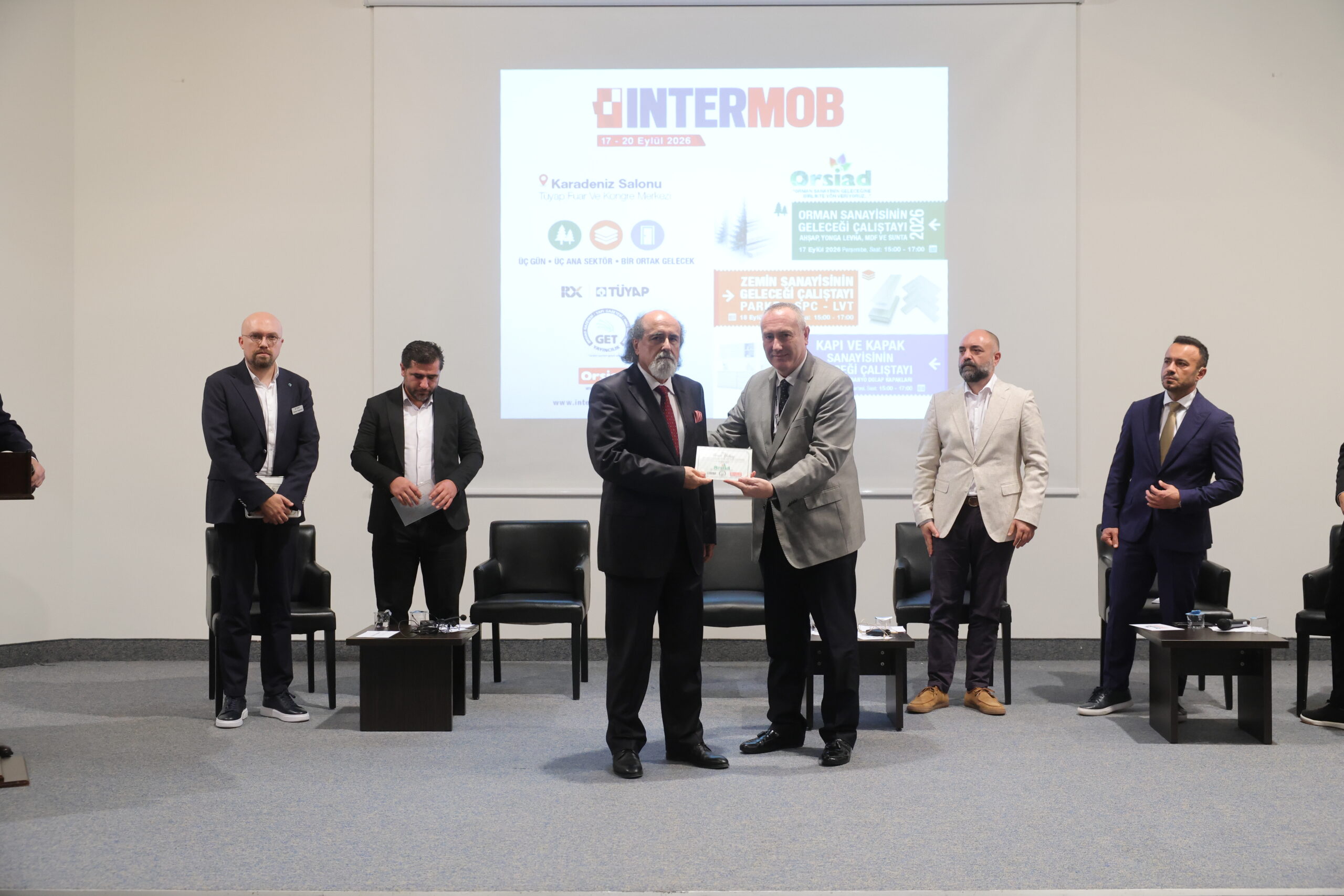
The moderator thanked all the speakers and Serhat Dayanıklıoğlu, then invited Dayanıklıoğlu to the stage for the plaque presentation ceremony.
Plaques were presented respectively to Recep Yazganel, Özkan Soylu, Necati Yılmaz and Görkem Ergüç.
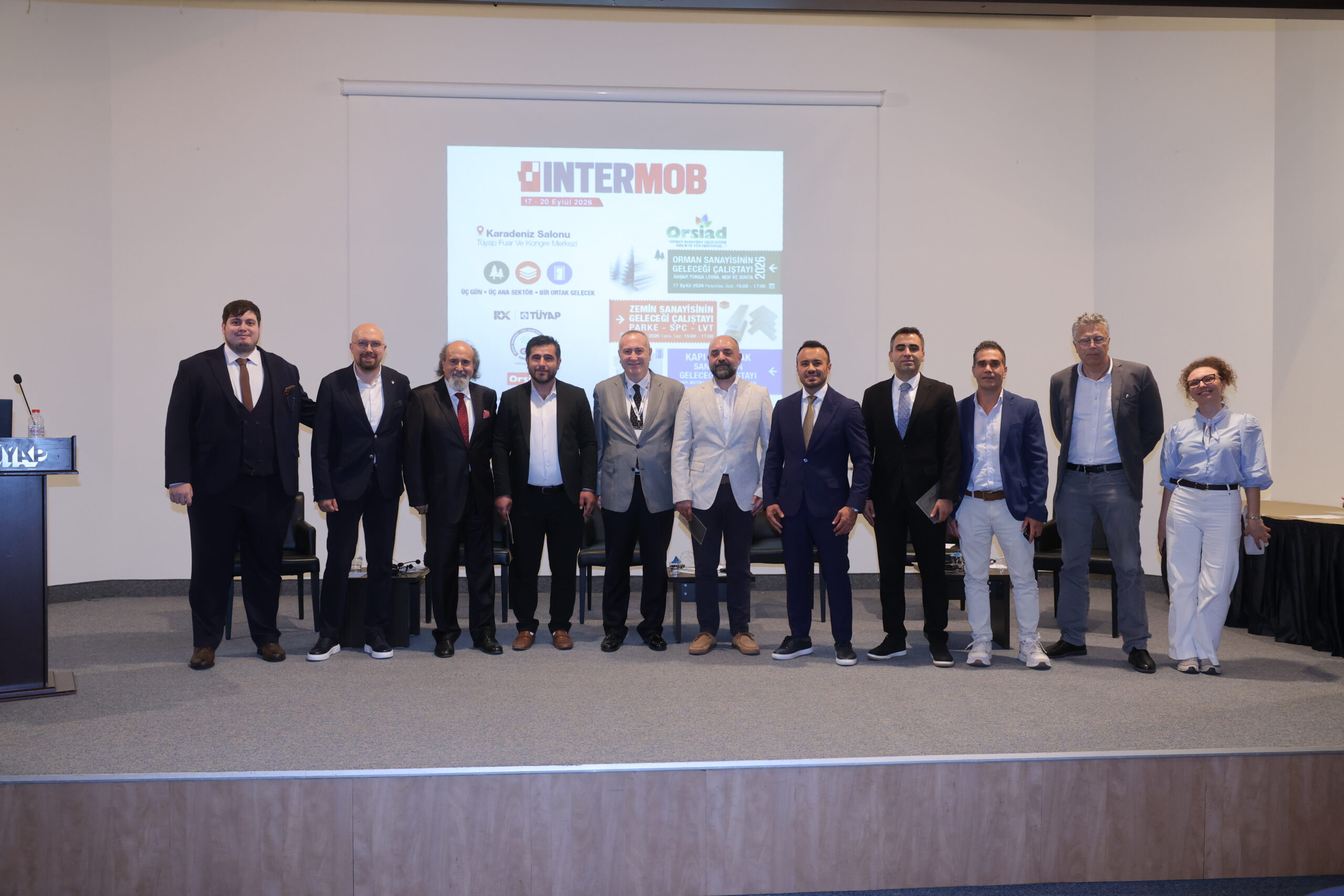
The program concluded following a group photograph.