

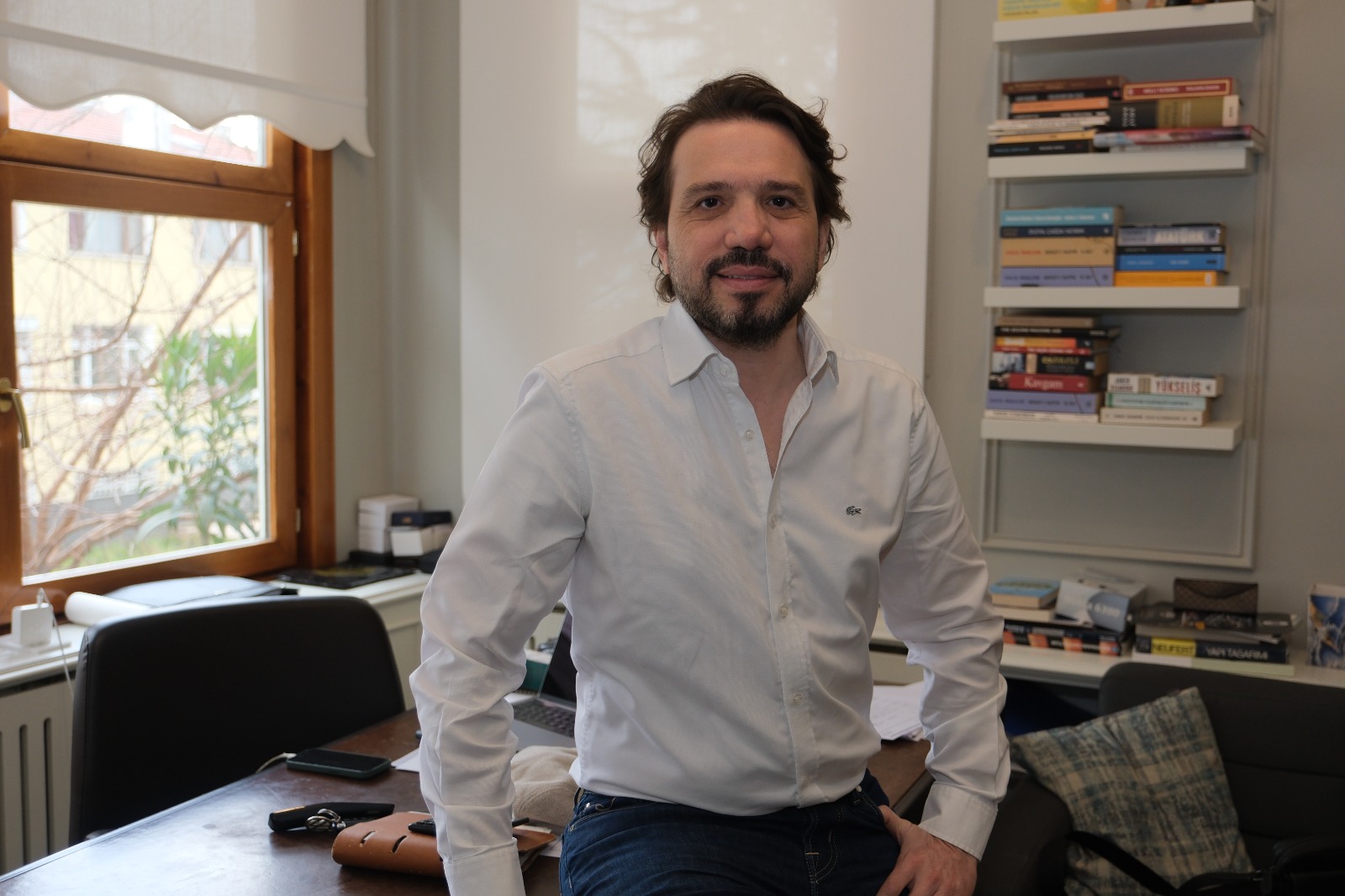
Architect Mustafa Onur Eraydın stated that urban transformation in Türkiye must gain momentum and said, “The issue is not only renewing buildings, it is rebuilding cities with a holistic approach. Producing safe structures is no longer a choice, it is a necessity.”
The growing earthquake risk in Türkiye and the threat posed by the aging building stock have once again brought urban transformation to the top of the agenda. Mustafa Onur Eraydın, Architect and Founding Partner of Arter İnşaat, emphasized that the current construction practice is no longer sustainable and drew attention to the fact that transformation is not only a technical issue, but also a strategic one.
In Türkiye, where there are approximately 7 million risky buildings, around 1.5 to 2 million of these structures are awaiting urgent transformation due to the level of risk they carry. More importantly, around 30 million people in Türkiye live in buildings described as “earthquake-risky.” Reminding that millions of independent units across the country are under risk, Eraydın said: “The picture we see on the ground today is clear: a significant portion of Türkiye’s building stock consists of structures built without proper engineering services and according to old regulations. This creates serious vulnerability against earthquake risk. Urban transformation is no longer a process that can be postponed.”
“New-generation urbanism should focus on life, not parcels”
Stating that one of the most critical shortcomings of urban transformation is the planning approach, Eraydın said that current practices mostly proceed on a parcel-by-parcel basis and that this deepens urbanization problems in the long term. He continued:
“Today, many transformation projects focus only on renewing the existing building. However, what we call a city is not made up only of buildings. Transportation infrastructure, social facilities, green spaces, parking solutions, and even disaster assembly areas are inseparable parts of this process. A new-generation urbanism approach requires human-centered and holistic planning.”
According to Eraydın, the right urban transformation model should increase not only physical renewal, but also quality of life. “Building higher-rise buildings is not urbanization. The real issue is being able to create more livable, more accessible, and safer living spaces,” he said.
Eraydın: It is not a technical process, but a system issue
Stating that the concept of “safe structure,” which lies at the center of urban transformation, is often limited only to concrete quality, Eraydın said this approach is incomplete:
“What we call a safe structure is a complete system that starts with soil surveys and extends to the static project, material quality, workmanship, inspection, and the usage process. In Türkiye, some of these processes can still be neglected in many projects. However, even the smallest negligence creates serious risks.”
Emphasizing that a large portion of buildings constructed before 2000 do not comply with current earthquake regulations, Eraydın said: “Today, the main goal of transformation should not simply be demolishing the old and building the new. It should be producing long-lasting and resilient structures based on proper engineering principles.”
Experience extending from healthcare buildings to urban transformation
Eraydın stated that Arter İnşaat carries the experience it has gained in projects requiring high technical precision, especially hospital projects, into urban transformation projects as well, and highlighted the importance of this experience:
“Healthcare buildings are projects with the lowest tolerance for error. When you work with this discipline, your quality standards automatically rise. We reflect this approach in all our projects. We have to apply the same engineering sensitivity in urban transformation as well.”
What will determine the fate of urban transformation?
Eraydın stated that one of the biggest obstacles to urban transformation is financing and said that new models need to be developed in order to accelerate the process:
“Risk discourse alone is not enough to convince citizens to take part in transformation. Economically accessible solutions must also be offered. Long-term loan models, public support, and collaborations in which the private sector plays an active role will accelerate this process.”
He also noted that bureaucratic processes need to be simplified, saying: “The longer the process takes, the more costs increase. This makes transformation more difficult. A faster, more transparent, and more predictable system must be established.”
“The future of cities will be determined by the steps taken today”
Emphasizing that urban transformation directly affects not only today’s life, but also the quality of life of future generations, Eraydın concluded his words as follows:
“Every step we take today determines the cities of tomorrow. If we do not plan correctly, we will carry today’s mistakes into the future. But if we move forward with the right vision, we can build cities that are both safe and have a high quality of life. This is exactly what the new-generation urbanism approach means.”