

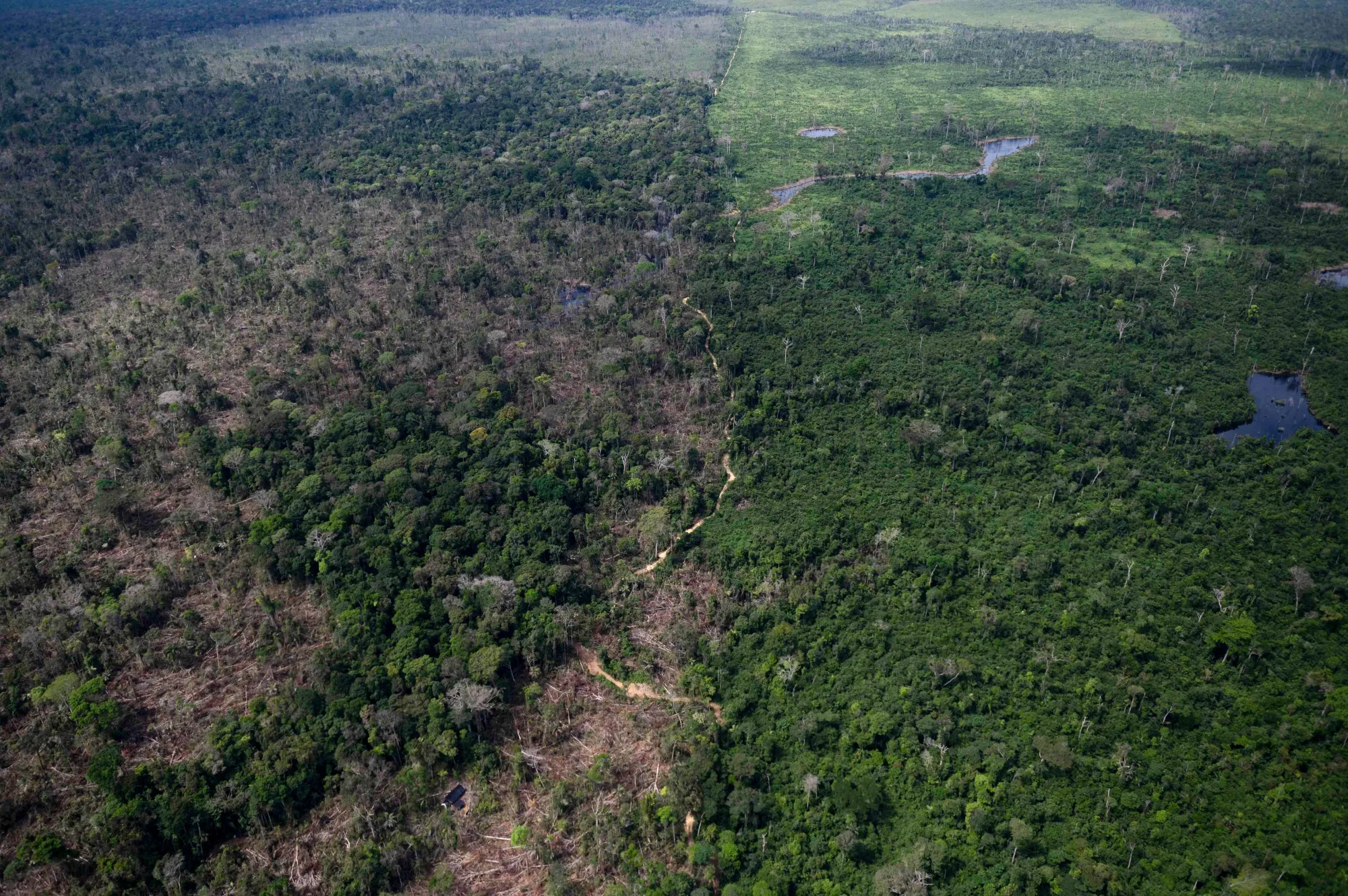
Tropical forest loss fell significantly in 2025 after reaching a record level the previous year. According to new data from the University of Maryland, published through the World Resources Institute’s Global Forest Watch, the loss of mature and largely undisturbed humid tropical forests declined by 36% compared with 2024.
Despite this improvement, the world still lost 10.6 million acres of rainforest in 2025. This corresponds to an area roughly the size of Denmark, or more than 11 soccer fields disappearing every minute.
The slowdown marks a notable improvement from the previous year, but the broader trend remains concerning. Tropical primary forest loss in 2025 was still 46% higher than it was a decade earlier. The decline also came during a year with relatively fewer wildfires after the exceptionally severe fire season of 2024. Rising temperatures and more intense droughts are making fires more frequent and more damaging across tropical regions.
Outside the tropics, the climate signal was even more visible. In Canada, wildfires burned 13 million acres, making 2025 the country’s second-worst fire year on record. In France, fire-related tree-cover loss reached its highest level ever recorded, rising to seven times the previous year’s figure.
The analysis uses a broad definition of forest loss, including not only deforestation for agriculture, but also timber harvesting and natural disturbances.
2030 forest pledge remains off track
At the COP26 climate summit in 2021, more than 100 countries pledged to halt and reverse forest loss by 2030. However, the world remains far from meeting that target. According to the World Resources Institute, forest loss in 2025 was still about 70% too high for countries to be on track for the 2030 deadline.
Elizabeth Goldman, co-director of Global Forest Watch at WRI, said reaching this goal in the coming years will be difficult as forests become more vulnerable to climate change, while global demand for food, fuel, materials and forest land continues to rise.
Agriculture remained the largest driver of tree-cover loss across the tropics in 2025. Both large-scale commodity production and subsistence farming contributed to the decline. In Brazil and Bolivia, cattle ranching and soy cultivation were among the main pressures, while coca, oil palm and other crops contributed to forest losses in Peru, Laos and other regions.
In much of the Congo Basin, forest clearing was more closely linked to shifting cultivation, demand for wood fuel and poverty.
Fires increasingly amplify forest pressures
WRI noted that fires are increasingly interacting with existing pressures on forests. Over the past three years, fires have consumed twice as much tree cover as they did between 2003 and 2005. In tropical regions, most fires are started by human activity, but hotter and drier conditions linked to climate change are making forests more flammable and allowing fires to spread farther.
Brazil recorded the largest absolute area of primary forest loss in 2025, but also achieved a major reduction compared with the previous year. The country, which contains about two-thirds of the Amazon rainforest, cut primary forest loss by 42% year on year. The report links this decline to stronger environmental policy and enforcement under President Luiz Inácio Lula da Silva.
The improvement followed a difficult 2024, when Brazil’s Amazon experienced its worst drought on record and unprecedented forest fires.
André Lima, Brazil’s secretary for deforestation control, said the country’s forest policy is built around two connected priorities: reducing deforestation and controlling fires. He said the federal anti-deforestation plan was relaunched in 2023 under Lula and is now beginning to show results. Citing Brazil’s official data, Lima said Amazon deforestation fell 50% in 2025 compared with 2022.
On fires, Lima argued that the late-2024 spike was driven less by policy failure and more by extreme climate conditions, including a strong El Niño, North Atlantic warming and two consecutive years of drought. He added that the government has since increased its response, including $380 million for fire control, new prevention rules and greater support for state fire brigades and municipalities.
Matthew Hansen, a remote sensing scientist at the University of Maryland and director of its Global Land Analysis and Discovery laboratory, welcomed the improvement but stressed that forest conservation requires long-term consistency. He said a single good year is encouraging, but preserving tropical rainforests depends on maintaining progress year after year.