

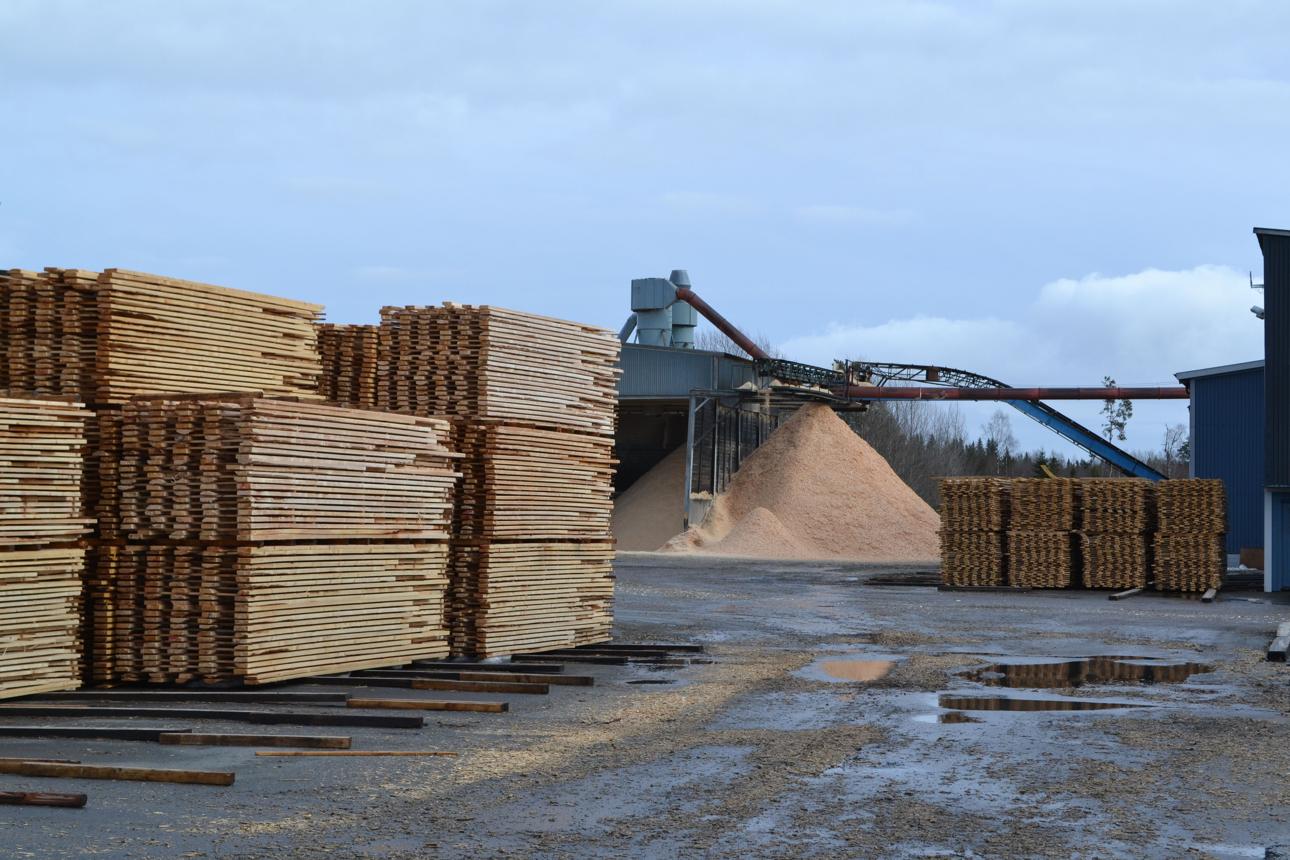
The 74th International Softwood Conference 2026, held in Dublin, Ireland, brought the economic and structural challenges facing the global timber industry into focus. Weak construction activity in Europe, rising production costs and difficulties in accessing raw materials continue to shape the industry’s outlook. The European Organization of the Sawmill Industry (EOS) announced that sawn softwood production in its member countries could decline by a further 4% in 2026. Assessments presented at the conference indicated that demand pressures may persist in the short term, while sustainable raw material supply and timber construction technologies could become increasingly decisive over the longer term.
Held in Dublin on October 28–29, 2026, the International Softwood Conference welcomed approximately 300 participants from 25 countries, setting a new attendance record for the event. Jointly organized by the European Organization of the Sawmill Industry (EOS) and the European Timber Trade Federation (ETTF), the conference brought together producers, traders, industry representatives and researchers to discuss developments in global timber markets.
Speaking at the opening of the conference, Irish Minister Niall Collins emphasized the significant growth potential of Ireland’s timber industry, particularly in the construction sector.
Hazel Ahern Flynn, representing the Irish Business and Employers Confederation (Ibec), provided an economic overview, highlighting the challenging business environment created by fluctuations in energy costs, interest rates and pressure on public spending.
Further 4% Decline Expected in European Sawn Softwood Production
Some of the conference’s most notable figures were presented by EOS President Tommi Sneck.
According to Sneck, sawn softwood production in EOS member countries declined by 10% between its peak in 2021 and 2023. Production subsequently stabilized at these lower levels through 2025, while preliminary estimates for 2026 indicate a further 4% contraction.
The decline in production was particularly pronounced in Germany and Sweden, with spruce lumber experiencing the most significant reduction among individual wood species.
High operating costs, timber prices falling again during the autumn and weak demand were identified as the main factors putting pressure on sawmill profitability.
Morten Bergsten, ETTF Vice President and Chairman of its Softwood Committee, also stated that although European consumption has remained broadly stable in recent years, it continues to fall short of the peak recorded in 2021.
Bergsten explained that wood could gain market share over other construction materials in certain European markets. However, the contraction in the overall construction market continues to limit total timber consumption.
Representatives of both organizations also addressed the impact of existing regulatory burdens on the industry’s competitiveness, arguing that legislation should be implemented in a manner that supports industrial activity.
Eurostat Data Confirm Weakness in the Construction Sector
The stagnation in construction markets discussed at the conference was also reflected in data published by the European Statistical Office, Eurostat, on November 19, 2026.
According to Eurostat, construction output across the European Union declined by 1.4% year on year in September 2026. During the same period, building construction activity alone contracted by 3.8%.
Monthly figures, however, presented a somewhat different picture. Building construction output increased by 0.9% month on month across the EU in September.
Nevertheless, the annual decline indicates that the recovery has not yet spread across all segments of the construction sector.
Assessing the European construction industry at the conference, Maurice van Sante, an expert at ING Research, highlighted significant differences between countries and subsectors.
Van Sante noted that infrastructure investment was performing more positively than new building construction, while renovation of existing buildings was accounting for an increasing share of overall construction activity.
This development suggests that the future of timber demand may depend not only on new residential projects but also on the renovation and improvement of existing buildings.
UK Timber Imports Decline While the Wood-Based Panel Market Follows a Different Trend
Mike Glennon, representing Glennon Brothers, provided an overview of the timber market in Ireland, the conference’s host country.
Glennon stated that Ireland’s annual timber production stands at approximately 1.5 million m³, with construction representing its most important end-use market.
He also identified the low rate of new forest establishment as a significant concern for long-term raw material availability.
Stephen King, representing Timber Development UK and Swedish Wood, reported that UK imports of sawn softwood declined by 5% in the first half of 2026.
The decrease was particularly pronounced in the whitewood category, predominantly comprising spruce.
However, the 2026 forestry statistics published by Forest Research, the UK’s official forestry research organization, reveal different trends across wood product categories.
According to official figures, the UK’s total sawn timber imports reached 6.2 million m³ in 2025, remaining unchanged from the previous year.
During the same period, imports of wood-based panels increased by 7% to 3.4 million m³.
These figures demonstrate that the weak performance of the sawn timber market has not affected all wood product categories to the same extent.
In particular, the growth in wood-based panel trade volumes highlights the need to assess demand conditions separately for different product groups.
Housing Construction and Trade Policies Put Pressure on North American Markets
Developments in the United States, one of the major players in global timber markets, were discussed by Marc Brinkmeyer of Idaho Forest Group.
According to Brinkmeyer, US housing starts remain below their long-term averages due to high mortgage interest rates and demographic developments.
Despite weakness in new residential construction, maintenance, repair and renovation activities have remained important sources of timber demand since 2008.
The increasing concentration of US production activities in the country’s southern states is also changing the structure of the market.
Alongside these developments, timber exports from Europe to the United States were reported to have declined.
Assessing the Canadian market, Jerome Pelletier of JD Irving stated that uncertainties surrounding raw material supply persist in certain regions and that tariffs imposed on softwood lumber continue to have negative effects on the industry.
According to Pelletier’s outlook, Canadian softwood consumption is expected to remain broadly stable over the next few years.
Russian Timber Exports Have More Than Halved Since 2019
A presentation on the Russian timber industry by Antti Koskinen of AFRY highlighted the scale of changes in international trade flows.
According to data presented by Koskinen, Russia’s sawn softwood exports have fallen by more than half since their peak in 2019.
The decline was attributed primarily to weaker demand from China and European sanctions.
High interest rates, logistical challenges and difficulties in maintaining production facilities are also making operating conditions increasingly challenging for the Russian timber industry.
Assessments of the Japanese market indicated that housing starts could decline over the long term, while non-residential construction may create new opportunities for timber use.
Timber Shipments to the Middle East and North Africa Expected to Decline
Regional trade figures presented at the conference also indicated an expected contraction in the Middle East and North Africa (MENA) market.
According to figures presented by Franz Kropfreiter of DABG Vienna, the region imported approximately 9.2 million m³ of timber in 2025, while shipments in 2026 are expected to total around 8.3 million m³.
The entire anticipated decline was attributed to reduced exports to Middle Eastern markets.
Egypt, meanwhile, remains an important market for lower-grade timber products, particularly those supplied by Scandinavian producers.
This outlook shows that international timber trade is influenced not only by total demand volumes but also by the product quality requirements, end-use applications and price expectations of individual destination markets.
New Risk to Raw Material Supply: Spruce Resources in Europe Could Decline
One of the conference’s major topics was how changes in European forests could affect future timber production.
Gerd Ebner, representing Timber Online and Holzkurier, reported that following bark beetle infestations in Central Europe in previous years, the volume of timber harvested from damaged trees had declined significantly.
He also noted that the decrease in overall log production continued during the same period.
According to Ebner, the long-term resilience of spruce trees to changing climatic conditions is particularly at risk in low-altitude regions.
As a result, the timber industry may need to reduce its dependence on spruce and increase the use of alternative species, such as pine, in construction applications.
These assessments of raw material supply gain broader significance when considered alongside the Food and Agriculture Organization of the United Nations’ (FAO) Global Forest Resources Assessment 2025.
According to FAO data, forests cover approximately 4.14 billion hectares worldwide. However, annual deforestation during the 2015–2025 period remained at 10.9 million hectares.
Although approximately 55% of the world’s forests are covered by long-term management plans, wildfires, pests, diseases and extreme weather events continue to place significant pressure on forest ecosystems.
These figures demonstrate that sustainable forestry is essential not only for environmental protection but also for securing the raw materials that the wood industry will require in the future.
Limited Growth Expected Through 2035, with Long-Term Raw Material Shortage Risks
Russ Taylor, representing Russ Taylor Global, presented a cautious growth scenario in his assessment of the long-term outlook for global timber markets.
According to Taylor, under a relatively optimistic scenario, the average annual growth rate of global sawn softwood consumption could reach 0.5% through 2035.
However, Taylor warned that today’s weak demand could eventually give way to a different challenge.
He noted that if demand strengthens again over the longer term, global log supplies could prove insufficient.
This assessment highlights the need for the timber industry to address short-term demand weakness and long-term raw material security simultaneously.
Timber Construction and Carbon Storage Emerge as New Growth Opportunities
The conference’s closing presentation was delivered by Dr. Florian Kraxner, a researcher at the International Institute for Applied Systems Analysis (IIASA), who focused on the role of timber construction technologies in combating climate change.
Kraxner emphasized the construction industry’s significant potential to reduce carbon emissions, explaining that using sustainably sourced wood in long-lasting building products can contribute to storing carbon previously absorbed from the atmosphere.
The United Nations Environment Programme’s (UNEP) 2025–2026 Global Buildings and Construction Report also contains figures highlighting the importance of this transformation.
According to the report, the buildings and construction sector accounts for 37% of global emissions and approximately half of all material extraction worldwide. The sector’s share of global energy consumption stands at 28%.
UNEP also reported that operational carbon dioxide emissions from buildings reached 9.9 billion tonnes in 2024.
The approach discussed by Kraxner at the conference also aligns with the concept known as the Forestry-Construction Pump in IIASA’s scientific research.
This concept focuses on the potential to store carbon absorbed by forests during their growth in long-lasting timber building components for many years.
However, realizing this potential depends on sustainable forest management, protection of raw material resources, the service life of products and the development of appropriate reuse methods.
European Union Prepares to Certify Carbon Storage in Timber Buildings
One of the latest developments supporting the sustainable timber construction agenda highlighted at the conference was a new certification initiative announced by the European Commission on November 18, 2026.
The Commission opened a draft methodology for public consultation concerning the certification of carbon storage through bio-based materials used in buildings.
Developed under the European Union’s Carbon Removals and Carbon Farming Certification Framework (CRCF), the initiative aims to establish reliable methods for measuring the long-term carbon storage capacity of sustainably sourced bio-based materials, including wood, when used in buildings.
The draft places particular emphasis on calculating stored carbon quantities, monitoring carbon storage and meeting environmental sustainability criteria.
The public consultation is scheduled to remain open until December 10, 2026. The initiative does not yet constitute a finalized certification methodology.
Nevertheless, this step by the European Commission indicates progress toward more systematic assessment of the environmental performance of timber construction materials.
Future Competition in the Timber Industry May Be Shaped by Raw Material Security and Added Value
The overall picture emerging from the Dublin conference demonstrates that the global timber industry faces different challenges over the short and long term.
In the short term, weak construction activity, high costs and contracting export markets are putting pressure on manufacturers’ profitability. Over the longer term, the impact of climate change on forest resources and the availability of sustainably sourced raw materials are becoming increasingly important.
At the same time, renovation of existing buildings, development of timber-based construction systems and advances in low-carbon materials have the potential to create new areas of business activity for the industry.
These developments are also important for manufacturers of sawn timber, wood-based panels, building components and woodworking technologies in Türkiye.
In particular, developments in the European construction sector, the industrial application potential of different wood species and the introduction of environmental performance certification systems are among the factors that could influence competitive conditions in international markets.
A common conclusion emerging from the conference is that a recovery in demand alone may not be sufficient to ensure the industry’s sustainable growth. Resilient forest ecosystems, reliable raw material supplies, competitive manufacturing conditions and technological transformation will also be necessary.
The next International Softwood Conference will take place in Gothenburg, Sweden, on October 19–21, 2027.