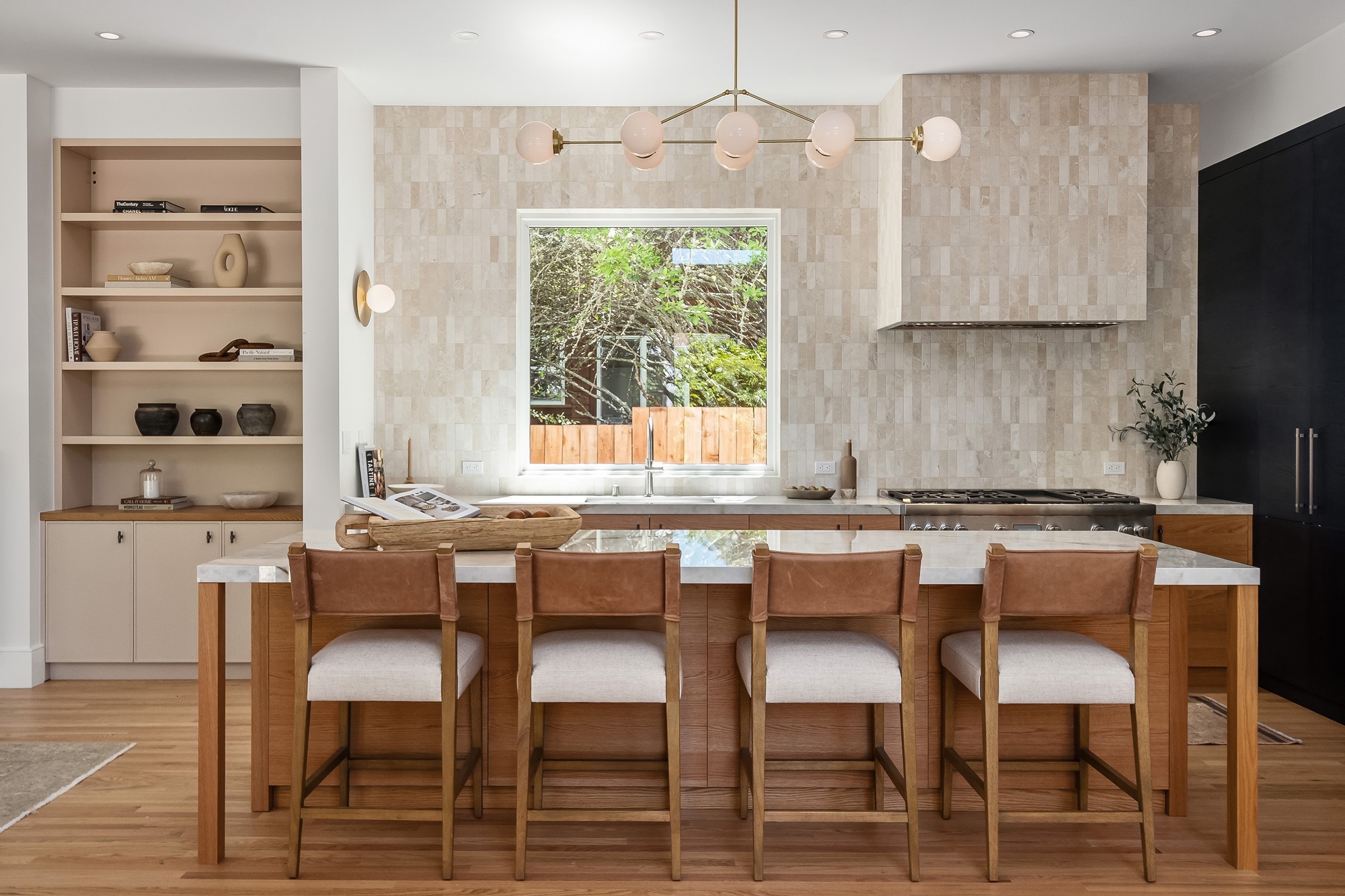
Changes in everyday living practices are pushing housing typologies toward increasingly compact dimensions. This necessitates a spatial and functional redefinition of kitchens. In small-scale kitchens, planning, storage capacity, hardware quality, lighting, ventilation and material choices must be addressed through a holistic design approach, which directly affects both ergonomic use and long-term performance.
The transformation of living spaces is redefining the role of kitchens within the home. Today, small kitchens are planned as social hubs used throughout the day where family members and guests come together, beyond the sole function of meal preparation. This position requires that choices be evaluated in a coordinated way at every stage of design.
The technical groundwork for the right layout at a small scale
Efficiency in small kitchen design begins with choosing the correct plan typology. Locating activity zones in line with user habits minimizes conflicts in the workflow. Appliance placement and passage widths are organized so as not to interrupt circulation and not to break the sequence of tasks. Dimensional coordination stands out as a key criterion in this process. Consistency of height, width and depth preserves modulation rhythms and ensures seamless integration of built-in appliances.
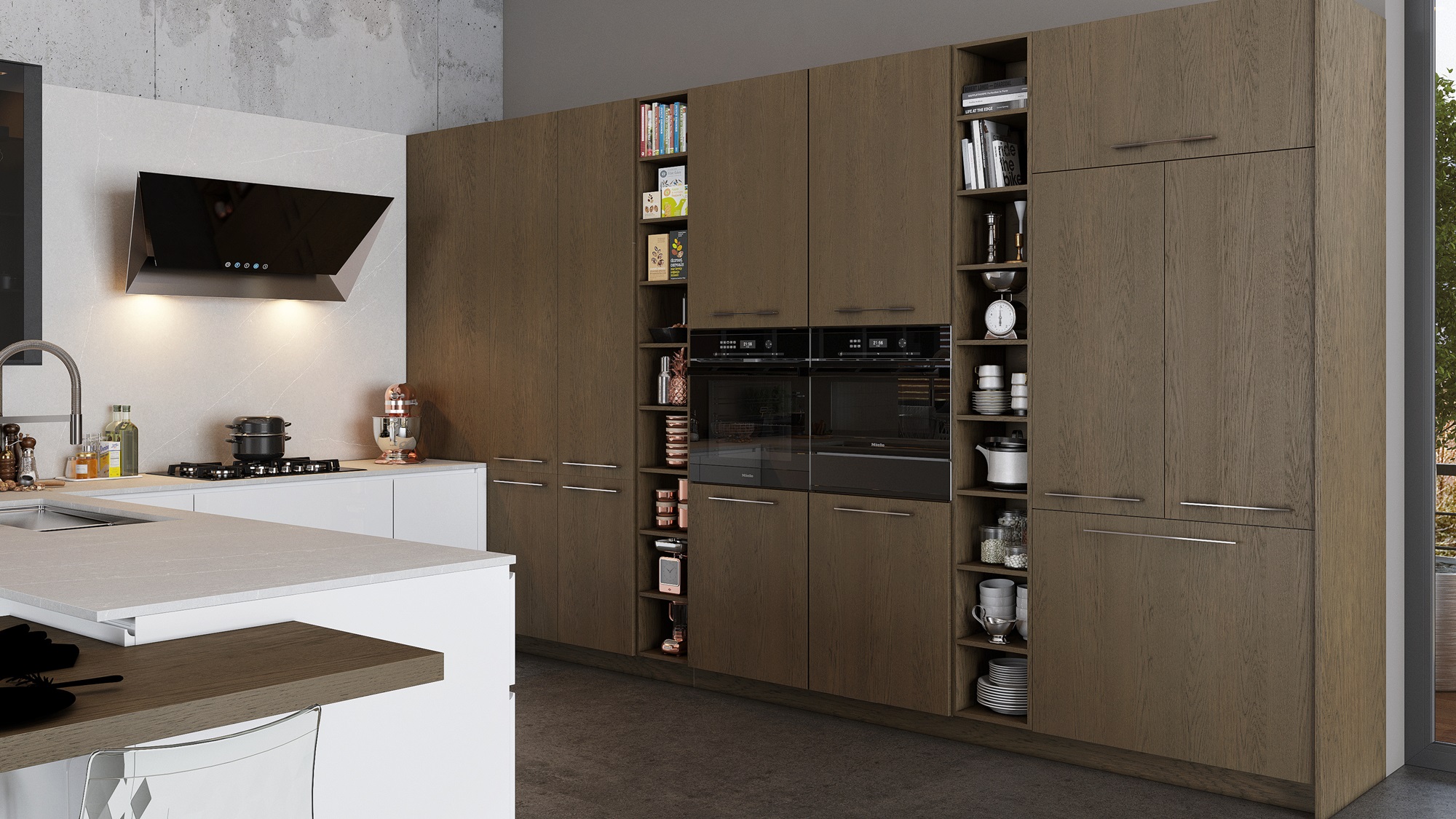
Boosting storage capacity is one of the most critical steps in small volumes. Ceiling-height modules, drawers with full-extension runners and blind-corner mechanisms enlarge usable space down to the millimeter. In high-use kitchens, hardware quality plays a decisive role in long service life.
Lighting in small kitchens is defined as both an aesthetic and a functional element. Task lighting supports ergonomics by delivering uniform, shadow-free light over the countertop. Ventilation is one of the fundamentals that preserves indoor air quality. Range hoods with the right capacity and duct layout prevent odor and particle spread. Short, low-turn, airtight ducts and correctly positioned outlets strengthen performance.
As the scale shrinks, the experience grows
With 50 years of manufacturing and project experience, Demsaş develops scale-sensitive, functional and aesthetic solutions for small kitchens. Its modular structure adapts to different plan typologies, while high storage capacity, ergonomic hardware and durable material options stand out. Within the product family, Hestia provides a robust infrastructure for open-plan and compact living scenarios with island or peninsula options, and maximizes storage with full-extension drawers and vertically rising modules. Helen creates an inviting atmosphere with framed door aesthetics, forming focal points through an open-shelf and closed-cabinet balance. Thanks to modular underpinnings, both models can be reconfigured with different hardware and accessory combinations, while details such as narrow column solutions and blind-corner mechanisms enhance functionality.