

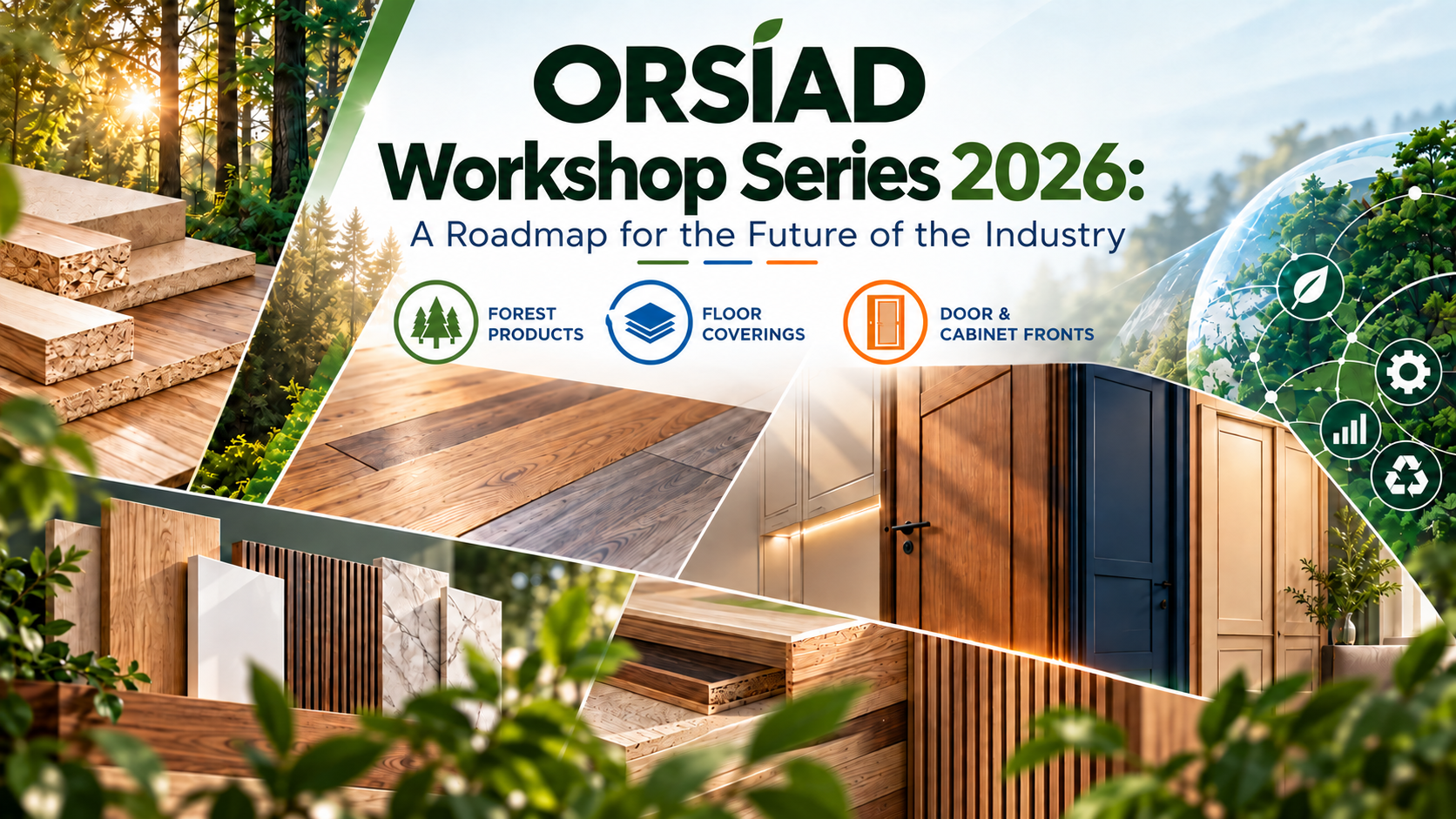
Three Days, Three Key Industries, One Shared Future
Organized by ORSİAD Newspaper as part of INTERMOB 2026 from September 17 to 19, 2026, the ORSİAD Workshop Series brought together different segments of the forest products, flooring, door and cabinet fronts industries on a single platform. Over three days, representatives from public institutions, industry associations, manufacturers, technology providers, academia and the application side evaluated the current outlook for 2026 and the roadmap extending into 2027. From raw material and cost pressures to sustainability, from skilled labor shortages to automation and from the lack of reliable industry data to value-added exports, the discussions across the different sessions demonstrated that all three industries are, to a significant extent, facing common challenges and opportunities.
The ORSİAD Workshop Series was held on September 17, 18 and 19, from 15:00 to 17:00 each day, at the Karadeniz Hall of the TÜYAP Fair and Congress Center. Organized by ORSİAD Newspaper and supported by INTERMOB 2026 organizer Reed TÜYAP, the program aimed not only to assess the current state of the industries but also to create a platform where different stakeholders could speak directly with one another about future goals and potential solutions.
The overall picture emerging at the end of the three-day program once again demonstrated that the value chain extending from forest products to flooring, doors and furniture components cannot be considered as a series of independent industries. Raw material costs affecting a panel manufacturer ultimately influence the competitiveness of flooring, door, cabinet front and furniture producers further down the chain. Investments in production technologies change design possibilities while evolving consumer expectations are reshaping the entire chain from factory to installer.
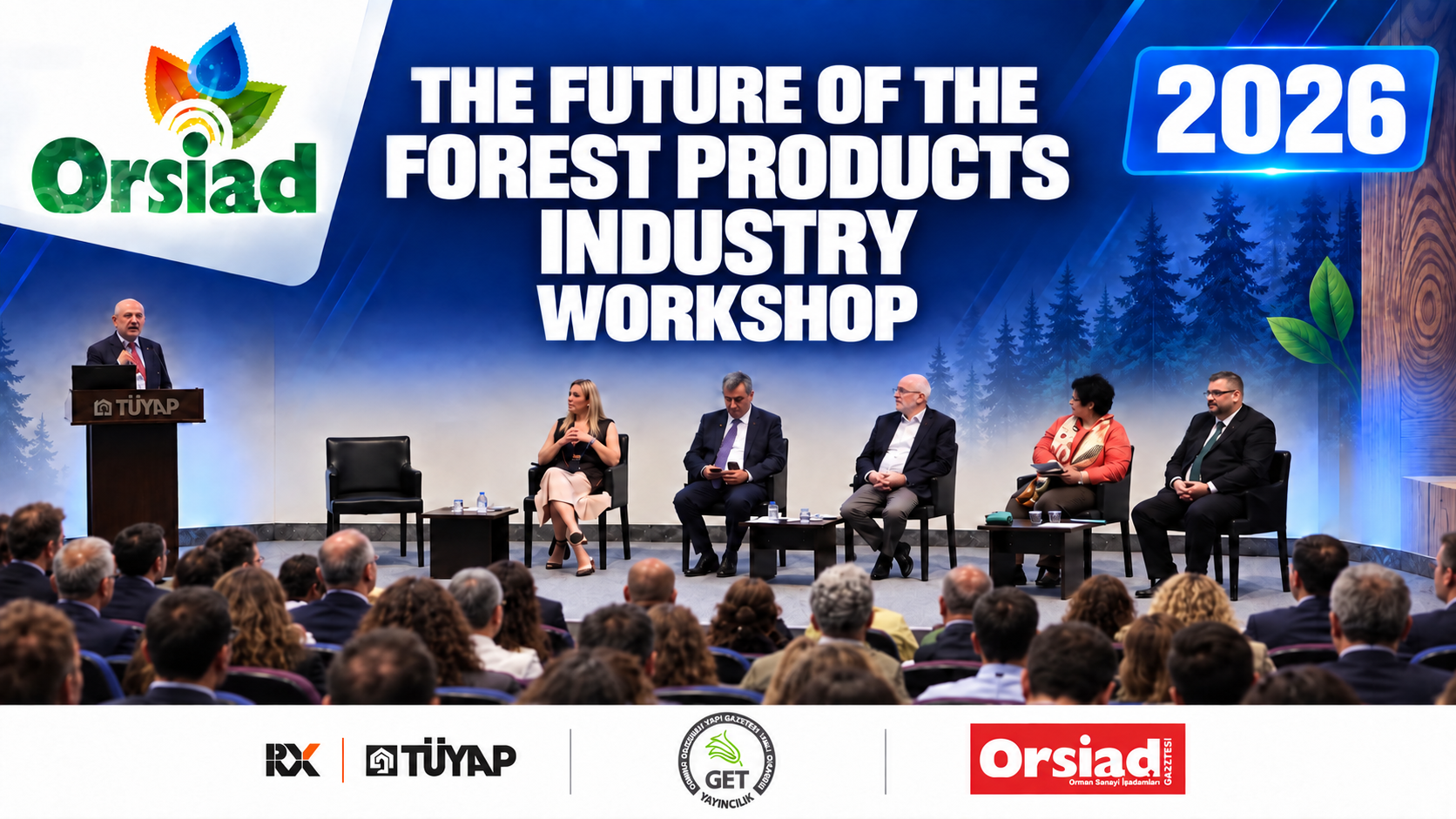
Forest Products Industry: Raw Materials, Costs and the Green Transition Are Part of the Same Equation
Held on the first day of the series, The Future of the Forest Products Industry Workshop examined the current state of the wood, MDF, particleboard and wider forest products industries from a broad perspective.
In his sector assessment on behalf of YOMSAD, Tevfik Dedebaş considered Türkiye’s approximately 23.4 million hectares of forest area, industrial wood production of around 25 million m³ and the industry’s total raw material requirements together. Dedebaş stated that when wood-based panels, pallets and packaging, construction, plywood, paper and other areas of use are considered together, total demand reaches approximately 32.5 million m³. He noted that the calculated deficit has not yet turned into a critical production problem because of current capacity utilization rates. Yapıştırılan markdown
One of the strongest discussions during the workshop concerned raw material costs and international competitiveness. While the pressure created by comparatively high wood costs in Türkiye, particularly on export-oriented manufacturers, was highlighted, participants also emphasized that recycling needs to become a more important element of raw material policy. Recovering urban waste wood for industrial use, balancing raw material demand between biomass facilities and the panel industry and expanding plantation forestry were among the concrete areas identified for potential solutions.
Bülent Güneş, Deputy Head of the Operations and Marketing Department at the General Directorate of Forestry, OGM, stated that Türkiye’s forests continue to expand, with growing stock reaching approximately 1.8 billion m³ and annual increment standing at around 51 million m³. While providing information about OGM’s production capacity, sales system, certification activities, ORBİS 2 and barcode-based traceability practices, Güneş also drew attention to structural costs behind raw material prices, including production expenses, personnel costs and mandatory transfers to public finances. Yapıştırılan markdown
With the contribution of Fatma Taycı from FSC Türkiye, certification, traceability and EUDR preparations also became key topics on the first day. The discussions emphasized that FSC certification should increasingly be viewed not simply as an environmental label but as a system that supports traceability throughout the supply chain and access to international markets.
The assessments of Alim Group Marketing Director Naci Güngör, National Wood Association President M. Celalettin Akça and Dr. Demet Sürücü from Bahçeşehir University shared a common emphasis: rather than simply producing more raw material, the priority should be creating greater value from the same amount of raw material. Recycling, upcycling, engineered wood, lightweight and high-performance panels, structural timber and higher value-added export models emerged as different components of this transformation. Yapıştırılan markdown
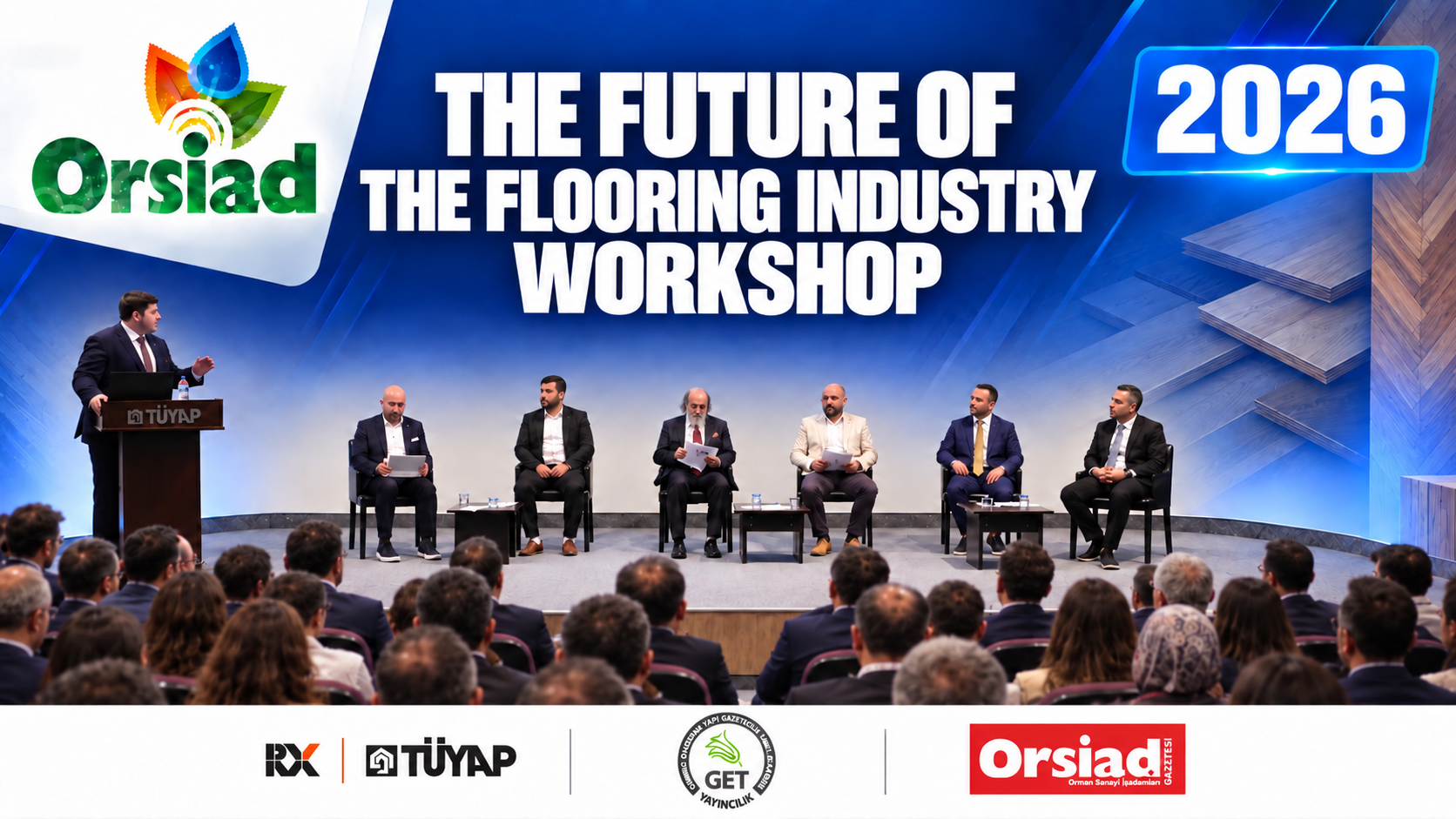
Flooring Industry: The Market Is Changing, but Products Are Positioning Alongside One Another Rather Than Replacing Each Other
Held on September 18, The Future of the Flooring Industry Workshop brought laminate flooring, solid and engineered wood flooring, SPC and LVT to the same table from the perspectives of manufacturers, importers, technology providers and installers.
Recep Yazganel, Türkiye Flooring Sales Manager at Kastamonu Entegre, stated that according to 2025 data approximately 135 million m² of flooring was produced domestically in Türkiye, of which around 45 million m² was exported and 90 million m² was absorbed by the domestic market. Imports were estimated at approximately 1 million m² while laminate flooring was identified as the dominant product category in Türkiye. Yapıştırılan markdown
Necati Yılmaz, General Coordinator at Aspen Yapı ve Zemin Sistemleri, stated that Türkiye’s engineered wood flooring market remains around 3-3.5 million m² and highlighted the relationship between housing inventory, building permits and first-hand housing sales as a major factor shaping demand in 2027. Metehan Kart from Area Floors noted that SPC has not yet completed its market penetration in Türkiye and is currently finding particular growth opportunities in renovation projects.
Bahtiyar Ceyran’s comprehensive presentation on behalf of Classen placed the transformation of the global flooring market within a broader context. A central argument was that laminate flooring, SPC/LVT and natural wood products should not be viewed as competitors that will completely replace one another but as categories that will continue to coexist by responding to different needs in different applications.
According to the figures presented by Ceyran, polymer-based products covered by the relevant producer associations are growing, with SPC accounting for a significant share of this category. Another important point raised during the workshop was that Türkiye’s strong manufacturing infrastructure increasingly positions the country not merely as a sales market but as a potential production hub. Yapıştırılan markdown
One of the most concrete outcomes of the flooring workshop was the need for reliable industry data. The absence of a common structure capable of regularly measuring actual sales and consumption volumes across different product groups in Türkiye emerged as an issue on which manufacturers, importers and other stakeholders largely agreed.
Another critical topic was the shortage of qualified installers. Özkan Soylu, Chairman of the Flooring Installers Association and other sector representatives pointed out that even a correctly manufactured product can develop problems on site as a result of incorrect underlay selection, improper subfloor preparation or faulty installation. Discussions involving YOMSAD Secretary General Serhat Dayanıklıoğlu also brought the possibility of strengthening the Vocational Qualification process for flooring installers back onto the agenda. Yapıştırılan markdown
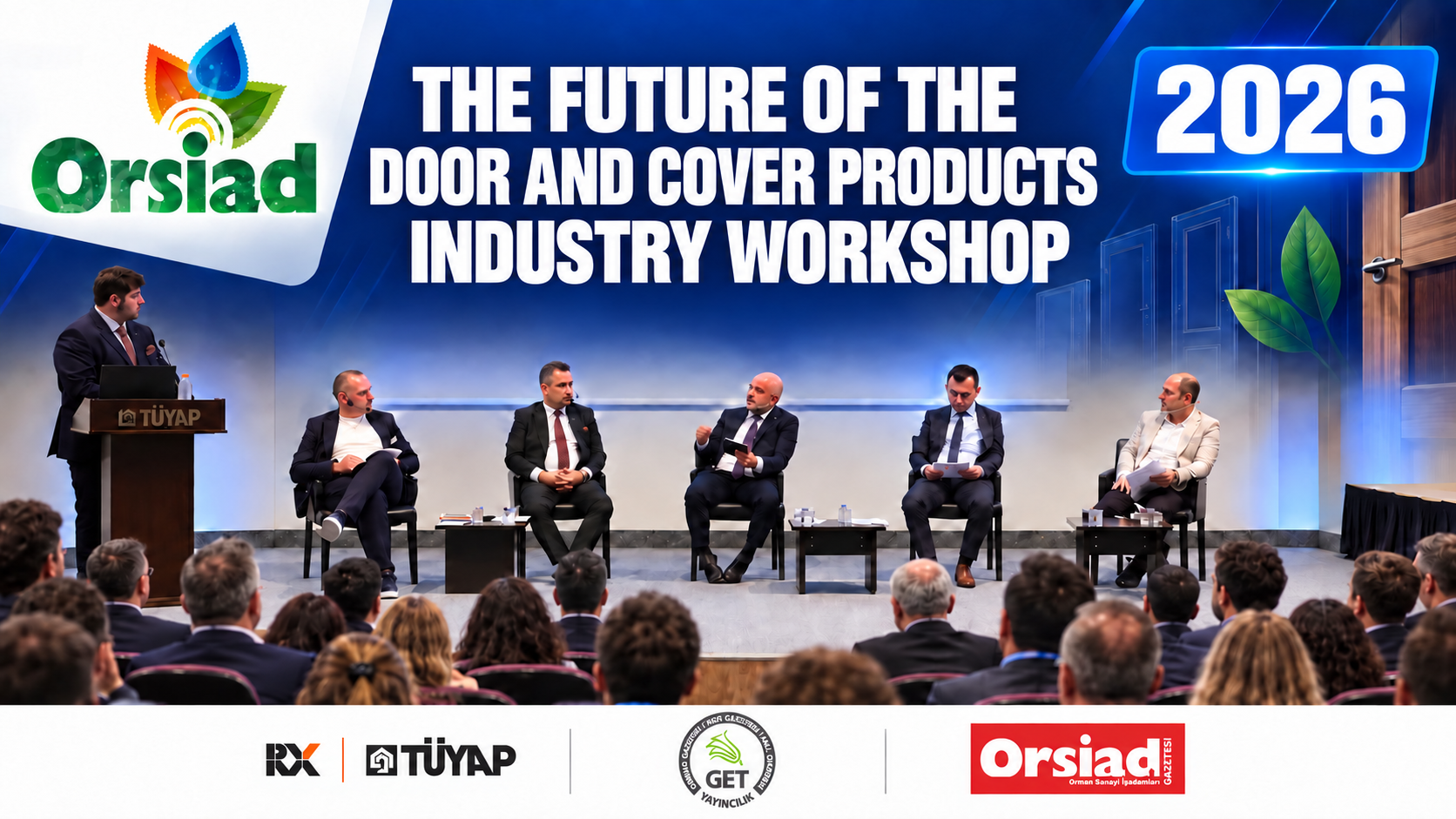
Door and Cabinet Fronts Industry: A New Competitive Arena from Smart Technologies to Automation
The third session of the series, held on September 19, The Future of the Door and Cabinet Fronts Industry Workshop, evaluated interior doors, steel and technical doors, kitchen and bathroom cabinet fronts, accessories, edge banding and production technologies as parts of the same value chain.
One of the first major conclusions of this session, much like in the flooring industry, was the absence of a regular and shared market database for doors and cabinet fronts.
Speaking on behalf of Kastamonu Entegre, Aziz Biçer stated that estimates based on different data sources suggest annual domestic interior door sales of approximately 8-10 million units and a total door market of around 13-14 million units.
For kitchen and bathroom cabinet fronts, where product dimensions vary significantly, he noted that evaluating the market in square meters can provide a more meaningful picture.
The differences between market estimates produced by different speakers using different sources and methodologies made the need for common sector data even more visible. Yapıştırılan markdown
Speaking on behalf of Normdoor and KAPSIAD, Mehmet Hacılar assessed expectations in steel doors, technical doors and urban transformation, stating that mass housing, individual residential developments, hotels and similar projects could create renewed activity in the sector during 2027.
On the trend side, smart locks, smart home integrations, invisible and minimalist design, anti-fingerprint surfaces, fire and acoustic performance, energy efficiency and customization emerged prominently.
Kadir Kaya from Biesse Türkiye and the Middle East emphasized that automation investments directly influence not only production speed but also workforce requirements, error rates and actual factory capacity utilization. Yapıştırılan markdown
Ümit Yıldız, representing MAKSDER, emphasized that correctly identifying customer needs in the field is where innovation begins.
Dr. Selçuk Akbaş from Portakal Plastik highlighted component quality, surface technologies and repeatable production.
Together, these assessments demonstrated that a door can no longer be regarded as a single finished product. It has become a system in which the performance of numerous industries comes together, from panels and edge banding to locks, adhesives, machinery and software.
Three Different Industries, the Same Structural Challenges
Although the three workshops focused on different product categories, common themes became increasingly clear by the conclusion of the series.
The lack of reliable data is one of the fundamental challenges making future planning difficult across all three industries. Establishing independent data that regularly measures capacity, production, imports, actual consumption and market shares by product category directly affects numerous areas ranging from investment decisions to export strategies.
Qualified human resources emerged as another common problem extending far beyond flooring installers alone. From machine operators and technical personnel to sales and installation, many parts of the industry require better training and stronger professional qualification systems. During the Door and Cabinet Fronts Workshop, skilled technical labor, vocational education and automation investments were also discussed as interconnected issues. Yapıştırılan markdown
The shift from price competition toward value-added competition was perhaps the most common message of the entire three-day program.
In the forest products industry, this means transforming raw material into higher-value products.
In flooring, it means developing product technologies, certification and solutions adapted to target markets.
In doors and cabinet fronts, it means improving design, automation, smart systems and performance characteristics.
All are different expressions of the same transformation.
At the same time, sustainability is no longer being considered solely as an environmental responsibility.
Raw material efficiency, recycling, traceability, environmental certifications, energy use and carbon performance are increasingly linked directly to market access and competitiveness. Yapıştırılan markdown
The Workshops Extended Beyond the Conference Hall
The ORSİAD Workshop Series was not limited to the participants physically present in the Karadeniz Hall.
All three sessions were broadcast digitally and the recordings were subsequently made available for continued access.
ORSİAD’s dedicated workshop page brought together video recordings from all three days and detailed post-event reports, allowing the views shared during the sessions to remain available to the industry after the event.
Across the three-day program, live broadcasts and video recordings reached more than 12,500 views.
As a result, the discussions extended beyond physical participants in Istanbul and reached industry professionals across different regions of Türkiye and abroad. Yapıştırılan markdown
Not an End Point for the ORSİAD Workshops, but a New Beginning
The most important outcome of the ORSİAD Workshop Series 2026 was not to suggest that the industries have no problems or that every question has been answered.
On the contrary, the workshops made visible, around the same table, issues that have long been discussed in different parts of the industries but have often been addressed separately.
Throughout the three-day discussions, it repeatedly became clear that raw material costs cannot be separated from production technology, sustainability cannot be considered independently from exports, high-capacity factories cannot create a competitive advantage without qualified human resources and healthy future planning cannot be achieved without reliable market data. Yapıştırılan markdown
For ORSİAD, the next objective will be to ensure that this dialogue does not remain limited to a single event.
Maintaining communication between public institutions, non-governmental organizations, industry, academia, technology providers, distribution channels and installers, following up on the issues identified and bringing new topics back to the table as industry conditions evolve will form the central mission of the Workshop Series in the coming period.
The overall picture emerging from the three days can be summarized in a single sentence:
Türkiye has strong manufacturing capabilities across the forest products, flooring, door and cabinet fronts industries. The key to the next leap forward will be combining this strength with data, technology, qualified human resources, sustainability and higher added value.